Buying a new frying pan used to be simple. You just grabbed whatever was on sale at the supermarket. But today, walking down the cookware aisle can feel overwhelming. You are bombarded with labels like “Green,” “PFOA-free,” “Diamond-infused,” and “Classic Nonstick.”
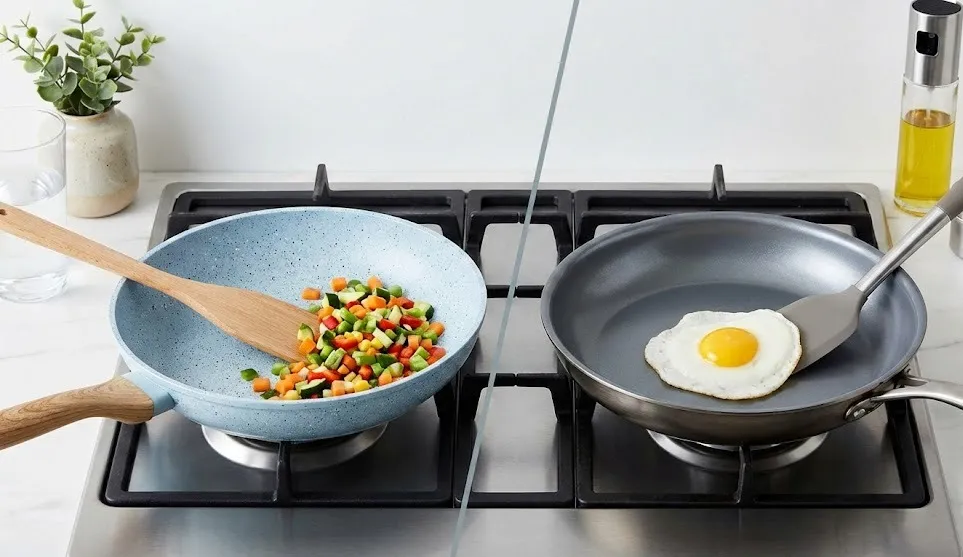
The two biggest contenders in the kitchen right now are traditional Teflon and the newer challenger, Ceramic. If you are trying to decide between nonstick ceramic vs Teflon, you are not alone. It is one of the most common questions home cooks ask.
In this guide, we will cut through the marketing hype. We will look at safety, durability, price, and performance to help you decide which pan deserves a spot on your stove.
The Basics: What Are We Actually Comparing?
Before we dive into the battle of nonstick ceramic vs Teflon, it is important to understand what these coatings actually are. They look similar, usually smooth and shiny, but under the microscope, they are very different animals.
What is Teflon (Traditional Nonstick)?
“Teflon” is actually a brand name for a chemical called PTFE (polytetrafluoroethylene). It is a synthetic plastic coating that is incredibly slick. It has been the king of the kitchen since the mid-20th century because it is unmatched when it comes to preventing food from sticking.
What is Ceramic Nonstick?
Despite the name, these pans aren’t made of pure ceramic like a flower pot or a coffee mug. “Ceramic” nonstick is metal cookware (usually aluminum) finished with a coating derived from sand (silica). This is called a “sol-gel” coating. It is naturally free from the chemicals found in traditional nonstick pans.
Round 1: Cooking Performance and “Slickness”
When you buy a nonstick pan, your main goal is usually simple: you want to fry an egg without it gluing itself to the metal.
Teflon (PTFE): Honestly, nothing beats a brand-new Teflon pan for slickness. You can often cook with zero oil, and the food will just slide right off. It is the gold standard for cooking delicate items like fish fillets or omelets.
Ceramic: Ceramic is also very slick, especially when you first buy it. You can cook with minimal oil. However, many chefs find that ceramic pans have a slightly different “feel.” They are efficient, but perhaps 10% less slippery than a high-end Teflon pan.
Winner: Teflon (by a very small margin).
Round 2: Safety and Health Concerns
This is usually the main reason people search for nonstick ceramic vs Teflon. We all want to ensure the food we cook for our families is safe.
Is Teflon Safe?
This is where it gets complicated. Traditional nonstick pans used to be made with a chemical called PFOA, which was linked to health issues. The good news? PFOA was phased out of cookware manufacturing in 2013. Today’s Teflon pans are generally safe—as long as you don’t overheat them.
If you heat a Teflon pan above 500°F (260°C), the coating can start to degrade and release fumes. These fumes can cause flu-like symptoms in humans (often called “Teflon flu”) and can be fatal to pet birds.
Is Ceramic Safe?
Ceramic coatings are inorganic. They do not contain PTFE or PFOA. Because they are made from silica (sand), they can withstand much higher temperatures (up to 800°F or roughly 425°C) without releasing toxic fumes. If you accidentally leave your pan on the burner, you might ruin the food, but you won’t fill your kitchen with chemical gas.
Winner: Ceramic wins this round for peace of mind, especially for households with pets or children.
Round 3: Durability and Lifespan
Nobody likes buying a pan only to throw it away six months later. Longevity is a huge factor in the nonstick ceramic vs Teflon debate.
How Long Does Ceramic Last?
This is the Achilles’ heel of ceramic cookware. While the technology is improving, ceramic coatings tend to lose their nonstick properties faster than Teflon.
- The Issue: The sol-gel coating can develop microscopic imperfections over time. Food starts sticking sooner than you might expect.
- Average Lifespan: With daily use, a ceramic pan might last 6 to 12 months before it starts losing its slickness.
How Long Does Teflon Last?
Traditional PTFE coatings are generally tougher. Modern “reinforced” Teflon pans (often infused with titanium or diamond dust) resist scratches better than ceramic.
- The Reality: Even good Teflon eventually wears out, but it usually outlasts ceramic.
- Average Lifespan: With proper care, a high-quality Teflon pan can last 2 to 4 years.
Winner: Teflon. It is simply more durable over the long haul.
Round 4: Heat Resistance and Searing
Are you looking to get a nice brown crust on a steak?
- Ceramic: Because it can handle higher heat, you can theoretically sear meat better in ceramic without worrying about toxic fumes. However, high heat can still carbonize oil on the surface, making the pan sticky over time.
- Teflon: You should never use high heat on Teflon. It is strictly a low-to-medium heat tool. If you try to sear a steak, you risk damaging the coating and releasing fumes.
Winner: Ceramic (for high heat tolerance), though cast iron or stainless steel is better than both for searing.
Pros and Cons Summary
To make your decision easier, let’s look at a quick breakdown of the pros and cons.
Traditional Nonstick (Teflon/PTFE)
- Pros:
- Incredibly slick surface; food slides effortlessly.
- Generally cheaper and widely available.
- Lasts longer than ceramic.
- Easy to clean.
- Cons:
- Cannot handle high heat (above 500°F).
- Releases fumes if overheated (dangerous to birds).
- Made with synthetic chemicals.
Ceramic Nonstick
- Pros:
- Free from PTFE and PFOA.
- Environmentally friendlier manufacturing process.
- Can withstand higher heat without releasing toxins.
- Comes in many trendy colors and designs.
- Cons:
- The nonstick ability wears off faster.
- Can be more brittle (prone to chipping).
- Often more expensive for high-end brands.
Care Tips: How to Make Any Pan Last Longer
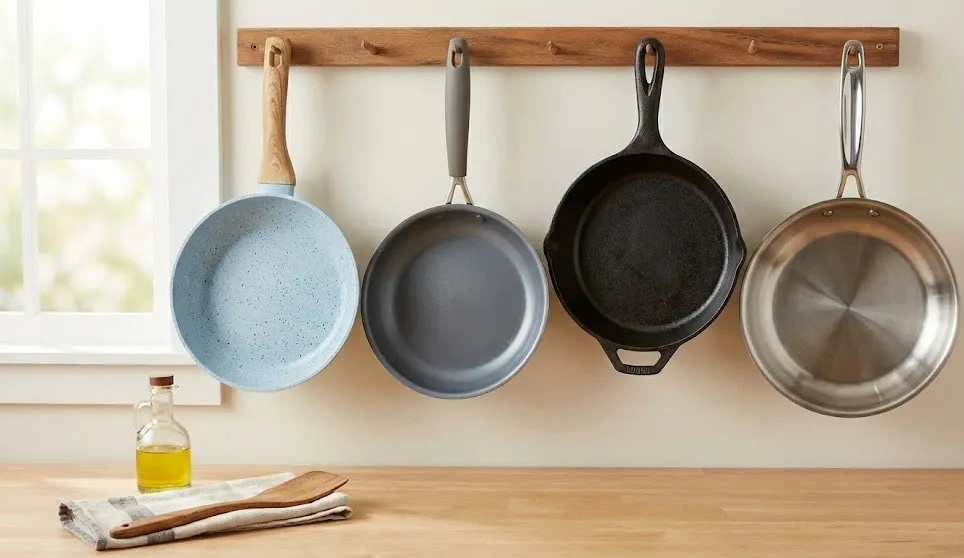
Regardless of which side of the nonstick ceramic vs Teflon fence you land on, the rules for care are surprisingly similar. If you treat nonstick pans like cast iron, you will ruin them in weeks.
Follow these simple rules to double the life of your pan:
- Skip the Metal Utensils: Even if the box says “metal utensil safe,” don’t do it. Use wood or silicone spatulas. Metal forks and tongs will eventually scratch the coating.
- Hand Wash Only: The dishwasher is the enemy. The high heat and harsh detergents in a dishwasher act like sandpaper on nonstick coatings. A soft sponge and soapy water are all you need.
- Cool Down First: Never take a hot pan off the stove and blast it with cold water. This causes “thermal shock,” which can warp the metal and crack the ceramic coating.
- Low to Medium Heat: Save the high heat for your stainless steel or cast iron pans. Nonstick is designed for eggs, pancakes, and delicate fish foods that cook best at lower temperatures.
- Use Oil, Not Spray: Aerosol cooking sprays contain additives (like lecithin) that build up a gummy residue on pans that is almost impossible to scrub off without ruining the surface. Use real butter or oil instead.
The Final Verdict
So, who wins the nonstick ceramic vs Teflon battle? The answer depends on what you value most in your kitchen.
Choose Ceramic if:
- You are health-conscious and want to avoid synthetic chemicals completely.
- You have pet birds in your house (this is crucial!).
- You care about the environmental impact of manufacturing.
- You are okay with replacing your pan every year or so.
Choose Teflon (PTFE) if:
- You want the ultimate nonstick performance for eggs and fish.
- You are on a budget and want a pan that lasts longer.
- You are diligent about not overheating your pans.
- You want a durable “workhorse” pan for daily breakfasts.
Ultimately, many home cooks find that having a mix is the best strategy. Keep a cheap Teflon pan for your morning eggs, but use ceramic or stainless steel for everything else. By understanding the differences, you can cook with confidence, knowing you have the right tool for the job.