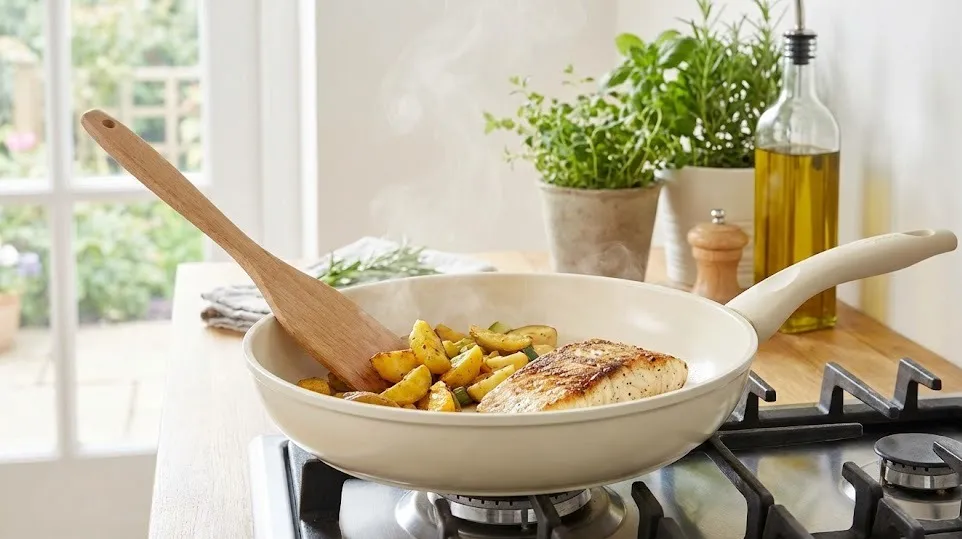
If you love cooking but hate the cleanup that follows, you have probably spent a lot of time looking for the perfect frying pan. For decades, traditional nonstick pans were the kings of the kitchen. But recently, a new challenger has taken the culinary world by storm: the nonstick ceramic skillet.
You have likely seen them on social media, those beautiful, colorful pans where eggs slide around like they are on an ice rink. But are they just a passing trend, or are they actually a healthier, better option for your daily meals?
In this guide, we will break down everything you need to know about ceramic cookware, from how it works to how to keep it lasting for years.
What Exactly Is a Nonstick Ceramic Skillet?
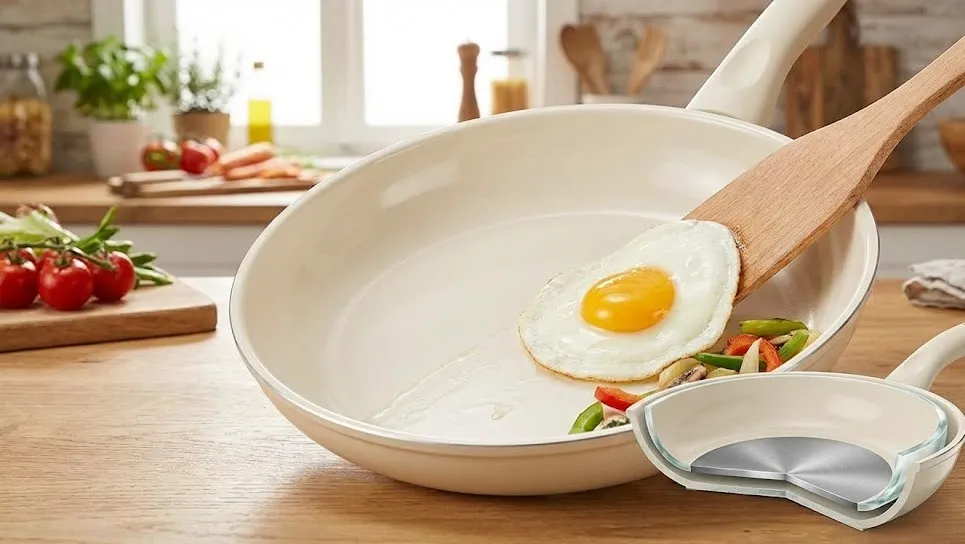
First, let’s clear up a common misconception. When we say “ceramic,” we aren’t talking about a pan made entirely of clay or pottery that you would put in a kiln. If you dropped a solid ceramic pan, it would shatter!
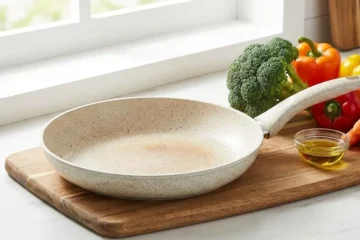
A nonstick ceramic skillet is actually made of metal, usually aluminum or stainless steel, that is finished with a special ceramic coating. This coating is derived from silica (sand) using a technology called “sol-gel.” It creates a slick, glossy surface that mimics the nonstick properties of traditional Teflon but without the same chemical composition.
Why Are They So Popular Right Now?
The rise of the nonstick ceramic skillet is largely due to health-conscious home cooks. People are becoming more aware of what goes into their food and the tools they use to cook it. Ceramic pans offer a promise of chemical-free cooking, often marketed as the “green” alternative to traditional nonstick cookware.
The Major Benefits of Going Ceramic
If you are on the fence about buying one, here are the biggest selling points that make a nonstick ceramic skillet a worthy addition to your cabinet.
1. Free of Harsh Chemicals
The biggest advantage is safety. Traditional nonstick pans often rely on PTFE (Polytetrafluoroethylene) and, historically, PFOA (Perfluorooctanoic acid). While modern Teflon is safer than it used to be, many people worry about toxic fumes being released if the pan is accidentally overheated.
Ceramic coatings are generally free from PTFE, PFOA, lead, and cadmium. This means that even if you accidentally leave your pan on the burner a little too long, it won’t release toxic fumes into your kitchen.
2. Superior Nonstick Performance
When a nonstick ceramic skillet is brand new, its performance is incredible. You can cook delicate foods like omelets, crepes, or flaky fish with little to no oil. The food simply glides off the surface. This is a huge plus for anyone looking to cut calories by using less butter or oil in their cooking.
3. Easy Cleanup
Because food doesn’t stick, cleaning is a breeze. In most cases, you don’t need to scrub. A simple wipe with a soft sponge and warm soapy water is usually enough to get the pan sparkling clean again.
4. High Heat Resistance
While you should always be careful with heat, ceramic coatings can generally withstand higher temperatures (up to 800°F or 450°C) compared to traditional nonstick coatings (which start to degrade around 500°F). However, just because the coating can handle high heat doesn’t mean you should always use it (more on that later!).
The Downsides: What You Need to Know
No piece of cookware is perfect. To give you an honest review, we have to look at the potential drawbacks of owning a nonstick ceramic skillet.
- Durability Issues: The nonstick properties of ceramic tends to wear off faster than high-quality PTFE pans. Over time, the microscopic imperfections in the ceramic surface can get clogged with food particles or oil buildup, causing food to stick.
- Brittle Coating: While the metal pan is strong, the ceramic coating can chip if you bang it against other pots or use metal utensils.
- Not Always Dishwasher Safe: Although the box might say “dishwasher safe,” the harsh detergents and high heat of a dishwasher can degrade the nonstick layer very quickly.
How to Choose the Right Nonstick Ceramic Skillet
Not all pans are created equal. If you are shopping for a nonstick ceramic skillet, keep these factors in mind to ensure you get the best value for your money.
The Core Material
Look for a pan with a hard-anodized aluminum or a stainless steel core. Aluminum conducts heat very well, ensuring your food cooks evenly without hot spots. Stainless steel is more durable and often compatible with induction cooktops.
Handle Comfort and Safety
You will be lifting and tossing food, so the handle matters.
- Stay-Cool Handles: Look for stainless steel or silicone-wrapped handles that don’t get hot on the stove.
- Rivets: Check if the rivets (where the handle meets the pan) are coated or bare metal. Food often gets stuck around bare rivets, making them hard to clean.
Oven Safety
Do you like to start a steak on the stove and finish it in the oven? Check the manufacturer’s rating. A good nonstick ceramic skillet should be oven-safe up to at least 350°F or 400°F.
Essential Care Tips: Make Your Pan Last
Many people claim their ceramic pans were ruined after a few months. Usually, this is due to improper care. If you treat your nonstick ceramic skillet correctly, it can serve you well for a long time.
Here are the golden rules of ceramic care:
- Skip the Cooking Spray: Never use aerosol cooking sprays (like Pam). They contain additives that burn at low temperatures and leave a gummy residue on the ceramic that is almost impossible to remove. Use real butter or oil instead.
- Low to Medium Heat Only: Even though ceramic can handle high heat, using it constantly will shorten the lifespan of the nonstick coating. Ceramic conducts heat efficiently, so medium heat is usually plenty for frying and searing.
- No Metal Utensils: Always use silicone or wooden spatulas. Metal forks and tongs will scratch the surface instantly.
- Let It Cool Down: Never take a hot pan off the stove and throw it directly into cold water. This causes “thermal shock,” which can warp the metal and crack the ceramic coating. Let it cool completely before washing.
- Hand Wash Only: As mentioned earlier, skip the dishwasher. A quick hand wash is safer and extends the life of the pan.
Conclusion: Is It Worth It?
So, is a nonstick ceramic skillet the right choice for you?
If you prioritize a chemical-free kitchen, enjoy cooking low-fat meals, and are willing to treat your cookware with a little extra gentleness, then absolutely yes. They are fantastic for breakfast foods, sautéing vegetables, and preparing delicate proteins.
However, if you are a rough-and-tumble cook who loves high-heat searing and throwing everything in the dishwasher, you might find ceramic frustrating.
For most home chefs, having at least one high-quality nonstick ceramic skillet in their arsenal is a game-changer. It makes the morning routine easier and keeps dinner healthy. Just remember to treat it with care, and it will reward you with delicious, slide-right-off-the-pan meals.