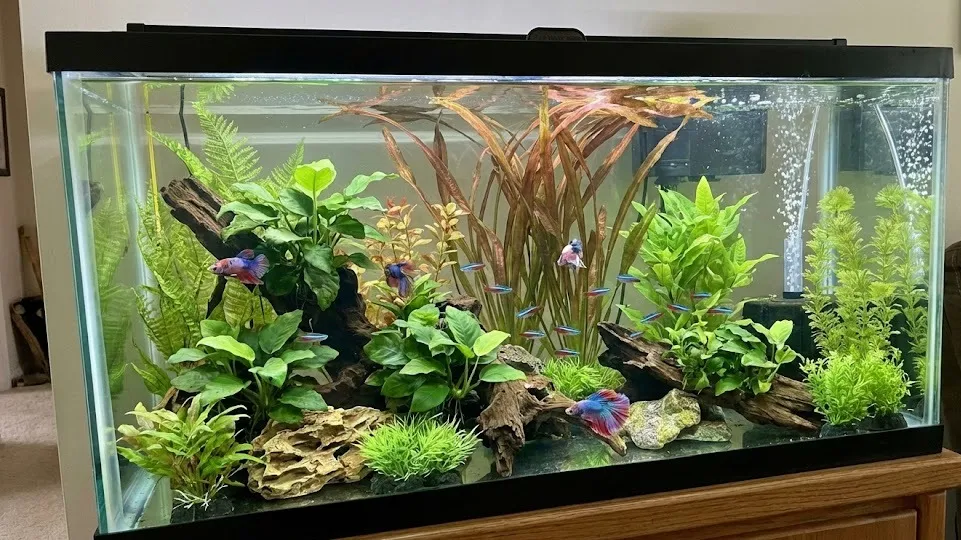
we all dream of having that lush, National Geographic-style aquarium in our living room. You know the one, perfectly green, swaying leaves, and happy fish darting through a dense jungle. But if you’ve ever tried to keep a planted tank alive, you know the struggle. The lighting needs to be just right, you need CO2 systems, fertilizers, and special substrates. Suddenly, your relaxing hobby feels like a part-time job.
This is where artificial plants for fish tank setups come to the rescue.
Gone are the days when fake plants looked like neon green, spiky plastic monstrosities. Today, high-quality artificial plants can look incredibly realistic, moving with the water flow just like the real deal. In this guide, we will explore why going artificial might be the best decision for your aquarium, how to choose the right type, and how to keep them looking brand new.
Why Choose Artificial Plants for Your Fish Tank?
There is a long-standing debate in the fish-keeping community: Real vs. Fake. While live plants have their biological benefits, artificial plants offer a level of convenience that is hard to beat.
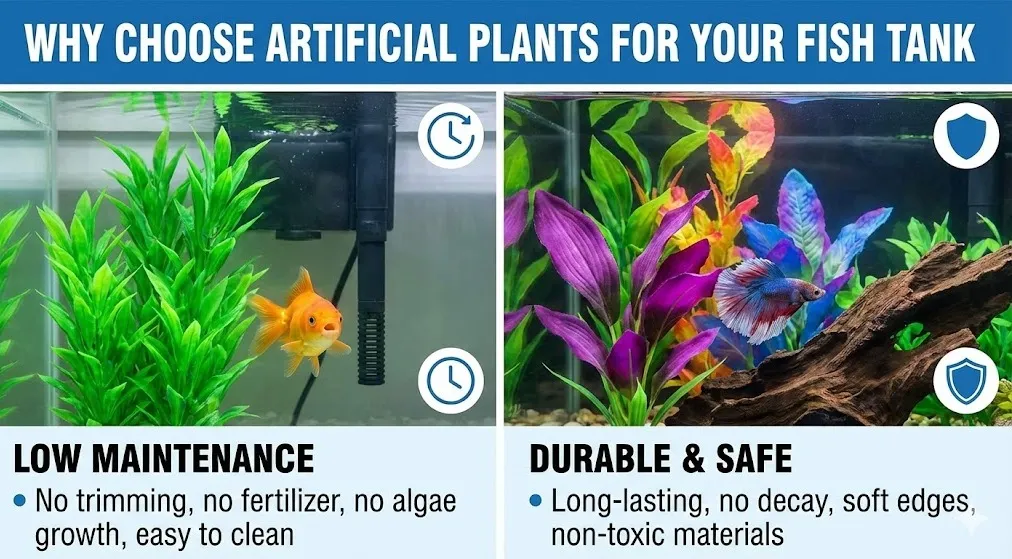
1. Zero Maintenance Required
Real plants die. They rot, they shed leaves, and they can clog your filter. Artificial plants for fish tank environments stay the same size and shape forever. You don’t need to prune them, add fertilizer, or worry about them turning brown while you are on vacation.
2. Fish Can’t Destroy Them
If you keep Goldfish, Cichlids, or Silver Dollars, you know that they treat live plants like an all-you-can-eat salad bar. Live plants can be decimated overnight. Artificial plants, however, are sturdy. Your fish can nip and dig all they want, but that plastic or silk plant isn’t going anywhere.
3. No Unwanted Guests
One of the biggest nightmares for aquarium owners is hitchhikers. When you buy live plants, you often accidentally introduce snails, hydra, or parasitic worms into your clean tank. Artificial plants come pest-free. A quick rinse, and they are ready to go.
Plastic vs. Silk: Which is Better for Your Fish?
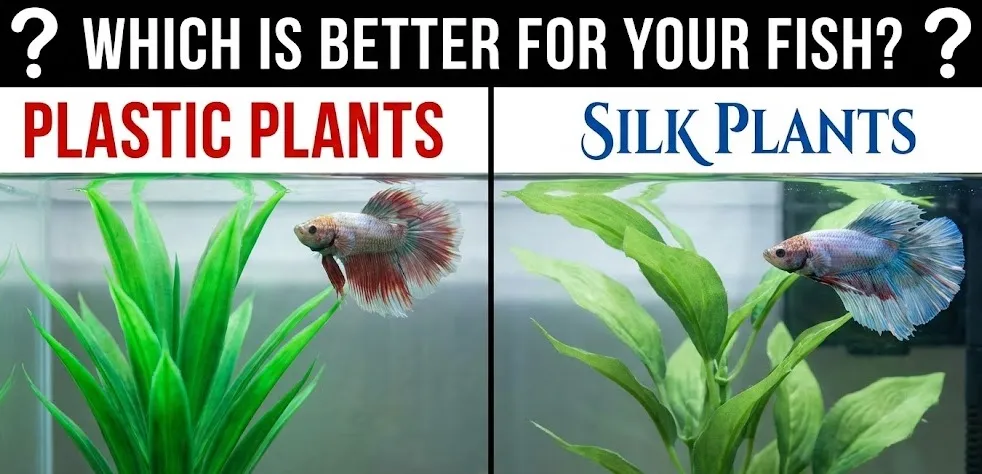
When shopping for artificial plants for fish tank decor, you will generally find two materials: plastic and silk. Both have pros and cons, and the right choice depends heavily on the type of fish you keep.
Plastic Plants
Plastic plants are durable and hold their shape well. They come in vibrant colors that can really make a tank pop.
- Best for: Tough fish like Cichlids or Oscars.
- The Downside: Some cheap plastic plants have sharp edges. If you have fish with long, flowing fins (like Bettas), stiff plastic can tear their fins, leading to infection. Always run a pantyhose test, if the plant snags the pantyhose, it will snag your fish’s fins.
Silk Plants
Silk plants are the closest alternative to live plants in terms of movement. They sway gently in the current and have a soft texture.
- Best for: Delicate fish like Bettas, Guppies, and Fancy Goldfish.
- The Downside: Over time, the edges of silk plants can fray, and algae can be a bit harder to scrub off the fabric compared to smooth plastic.
How to Design an Aquascape with Artificial Plants
Just because the plants are fake doesn’t mean the layout has to look fake. You can achieve a natural, stunning look by following a few simple design rules.
Use the “Foreground, Midground, Background” Rule
To create depth, arrange your plants by height:
- Background: Place your tallest artificial plants for fish tank setups at the back. This hides cords, heaters, and filter intake tubes.
- Midground: Use medium-sized bushy plants in the middle. This is where your fish will spend most of their time swimming and hiding.
- Foreground: Use small, grass-like artificial plants in the front. This keeps the viewing area open so you can actually see your fish.
Mix Textures and Colors
Don’t just buy five of the exact same plant. Mix broad-leaf plants with fine, needle-leaf varieties. While neon pink plants can be fun, sticking to varying shades of green, red, and brown will make your tank look much more natural and high-end.
Cleaning and Maintenance Tips
Even though they don’t die, artificial plants for fish tank environments do get dirty. Algae loves to grow on plastic and silk surfaces. Here is how to clean them safely without poisoning your fish.
- Remove Carefully: When you take the plants out during a water change, disturb the substrate as little as possible.
- Hot Water Scrub: Usually, running the plants under hot tap water and scrubbing them with a designated toothbrush (no soap!) is enough to remove algae.
- The Vinegar Soak: For stubborn algae or calcium deposits, soak your plants in a solution of 50% water and 50% white vinegar for 15 minutes. Scrub, then rinse thoroughly.
- Bleach Dip (Extreme Cases Only): If you have black beard algae, you can do a 10% bleach dip. However, you must rinse them incredibly well and soak them in water with a dechlorinator (like Seachem Prime) before putting them back in the tank. Never use soap or household cleaners.
Common Myths About Artificial Plants
Myth 1: Fish hate fake plants. Fish don’t care if a plant is made of polyester or cellulose. They care about structure. They want a place to hide when they feel threatened and a place to explore. As long as the artificial plants for fish tank provide cover, your fish will be happy.
Myth 2: Plastic plants release toxins. This used to be true decades ago. However, modern aquarium plants made by reputable brands are chemically inert and safe for freshwater and saltwater tanks. Always buy from a pet store, not a dollar store, to ensure the materials are aquarium-safe.
Conclusion: Is Artificial Right for You?
There is no shame in choosing artificial. In fact, for many hobbyists, it is the smarter choice. It allows you to focus on what matters most, keeping your water quality pristine and your fish healthy, without the added stress of gardening underwater.
By selecting high-quality artificial plants for fish tank setups, you can create a stunning, vibrant underwater world that requires minimal effort. Whether you choose soft silk for your Betta or sturdy plastic for your Cichlids, your tank can look beautiful for years to come.
So, go ahead and get creative. Your fish will love their new home, and you will love how easy it is to maintain!