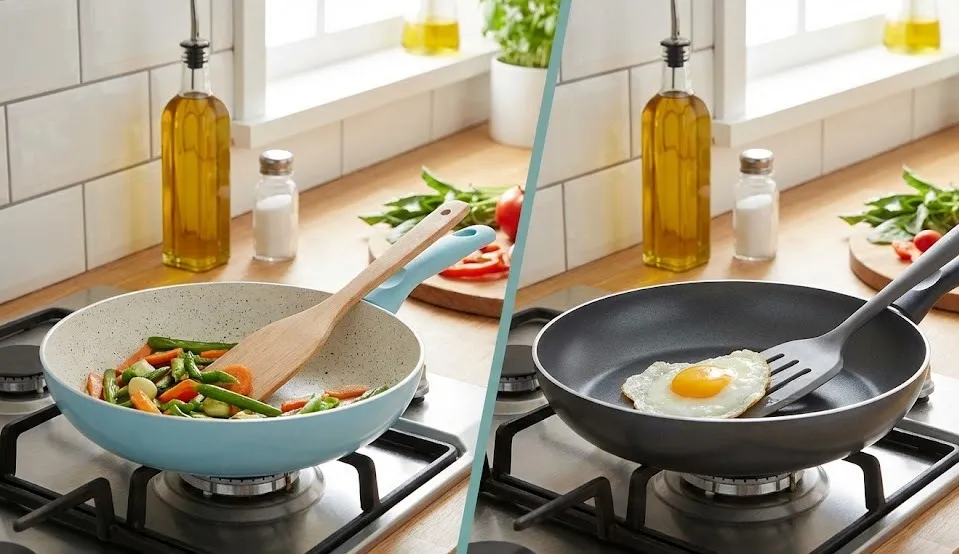
Walking down the cookware aisle today can feel a bit like walking through a chemistry lab. You see labels shouting about “PTFE-free,” “Hard Anodized,” “Sol-Gel,” and “PFOA.” It is enough to make anyone just grab the cheapest pan and walk away.
But since we use these pans almost every single day to feed our families, the choice actually matters.
For decades, Teflon was the undisputed king of the kitchen. It made flipping eggs effortless and cleanup a breeze. But in recent years, a colorful new challenger has arrived: Ceramic. Now, home cooks are stuck in a debate over nonstick ceramic vs Teflon.
Which one lasts longer? Which one cooks better? And most importantly, which one is safer for your health?
In this guide, we are going to strip away the marketing jargon and give you the honest truth about these two kitchen staples.
The Old Guard: What Exactly is Teflon?
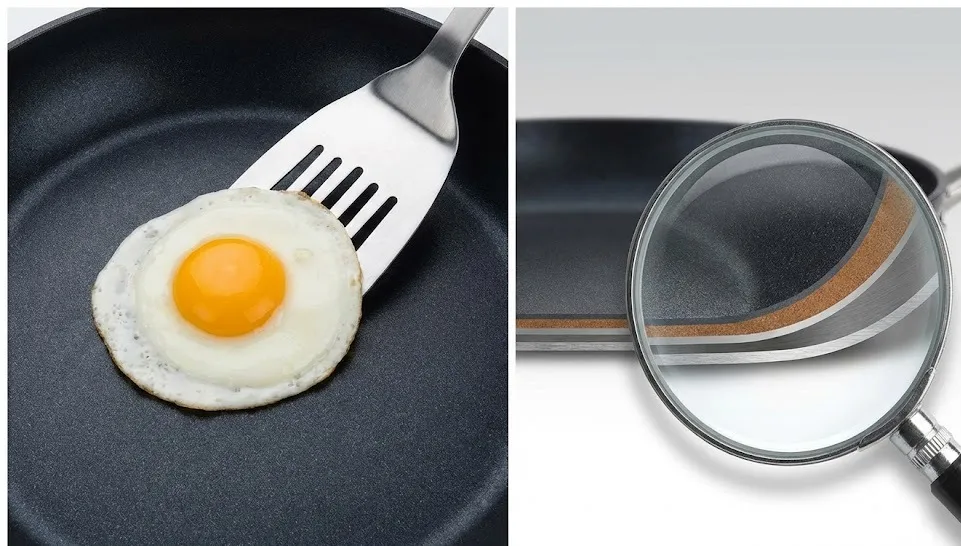
To understand the battle of nonstick ceramic vs Teflon, we first have to look at the reigning champion. “Teflon” is actually a brand name for a synthetic chemical called PTFE (polytetrafluoroethylene).1
It was discovered by accident in the 1930s and changed cooking forever. It creates a surface so slippery that virtually nothing can stick to it.
The Teflon Controversy
However, Teflon has a bit of a dark cloud over its head. Historically, the manufacturing process used a chemical called PFOA (perfluorooctanoic acid), which was linked to serious health issues.2
- The Good News: Since 2013, PFOA has been phased out of cookware manufacturing.3
- The Bad News: Teflon pans still rely on PTFE.4 While generally safe, if you overheat a Teflon pan above 500°F (260°C), the coating begins to break down and can release toxic fumes. These fumes can cause flu-like symptoms in humans and are famously fatal to pet birds.5
The Challenger: What is Ceramic Cookware?
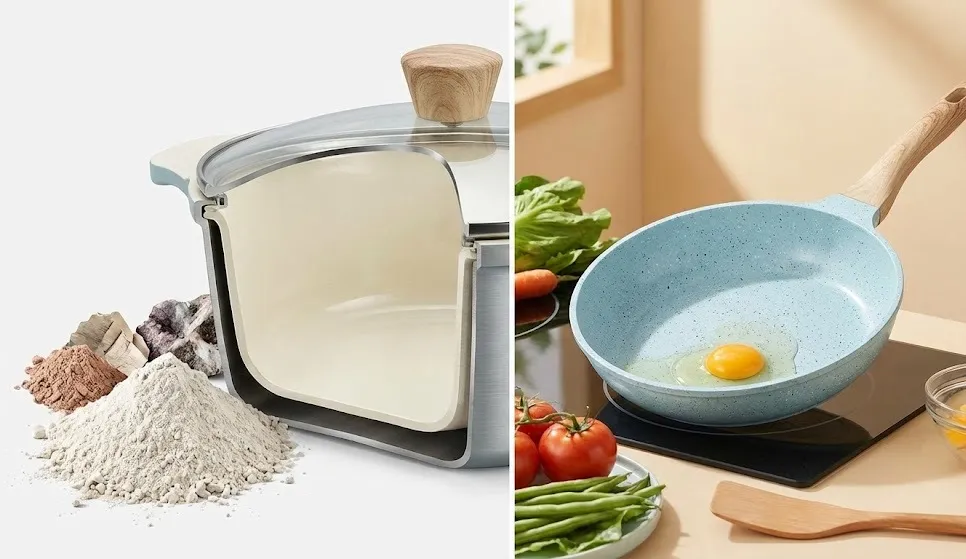
On the other side of the ring, we have ceramic nonstick. Despite the name, these pans aren’t made of solid ceramic like a flower pot. They are usually metal pans (aluminum or stainless steel) finished with a coating derived from silica (sand).
This coating is applied using a “Sol-Gel” process, which turns a liquid solution into a hard, glass-like gel.
When comparing nonstick ceramic vs Teflon, the biggest selling point for ceramic is that it is free from “forever chemicals.” It contains no PTFE, no PFOA, and no PFAS. It is an inorganic coating that won’t release toxic fumes, even if you accidentally overheat it.
Nonstick Ceramic vs Teflon: The Head-to-Head Showdown
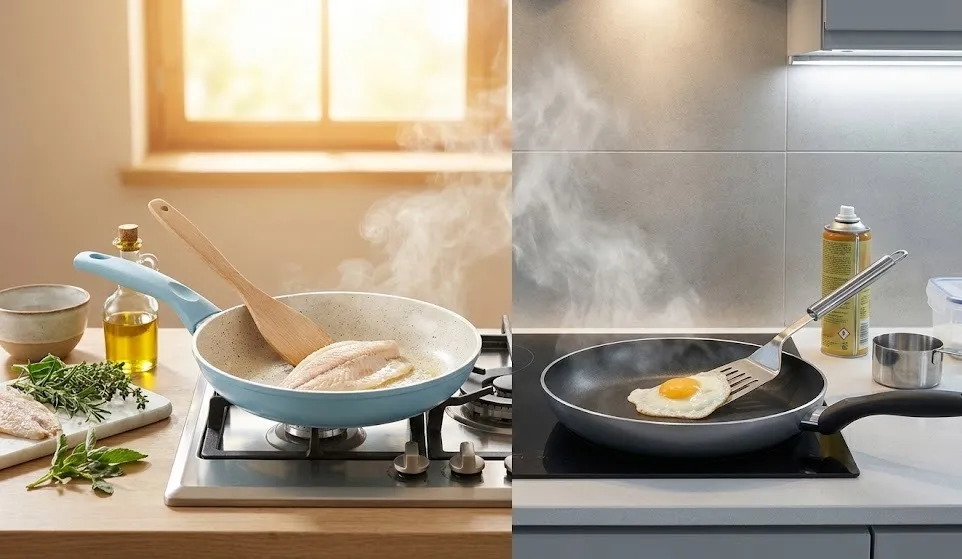
Now, let’s get down to business. We are going to compare these two across the four categories that matter most to home cooks: Safety, Performance, Durability, and Price.
Round 1: Safety and Health
This is usually the main reason people start researching nonstick ceramic vs Teflon in the first place.
- Teflon (PTFE): Modern Teflon is generally safe if used correctly.6 However, the risk of toxic fumes from overheating is real. If you are the type of cook who often gets distracted and leaves an empty pan on the burner, Teflon poses a risk.
- Ceramic: This is the clear winner for the health-conscious. Because the coating is made from natural minerals, it is non-reactive and non-toxic. It can withstand temperatures up to 800°F without breaking down.
Winner: Ceramic takes the gold medal for peace of mind.
Round 2: Cooking Performance (The “Slip” Factor)
How easily does that egg slide off the pan?
- Teflon: There is a reason chefs still use it. Teflon is incredibly slick. You can cook with almost zero oil, and food will still glide around the pan. It is chemically engineered to repel everything.
- Ceramic: When a ceramic pan is brand new, it is fantastic, sometimes even slicker than Teflon. However, food tends to stick a little more easily than on Teflon, meaning you will usually need a small amount of oil or butter to get that perfect slide.
Winner: Teflon edges out a slight victory for pure nonstick performance.
Round 3: Durability and Lifespan
This is the heartbreaking part of the nonstick ceramic vs Teflon debate. Neither of these pans are family heirlooms, but one definitely lasts longer.
- Teflon: A high-quality PTFE pan can last 3 to 5 years if you treat it well. The coating is flexible and tough.
- Ceramic: This is the ceramic pan’s Achilles’ heel. The coating is brittle. Over time, the high heat causes the “Sol-Gel” layer to degrade. Many users report that their ceramic pans lose their nonstick ability after just 6 to 12 months of daily use. Once the nonstick property is gone, it’s gone for good.
Winner: Teflon wins on longevity. You will likely buy three ceramic pans in the time you use one Teflon pan.
Round 4: Environmental Impact
If you care about the planet, the nonstick ceramic vs Teflon choice becomes clearer.
- Teflon: PTFE is a member of the PFAS family, often called “forever chemicals” because they do not break down in nature.7 Manufacturing these chemicals can be hard on the environment.
- Ceramic: The production of the silica-based coating releases fewer CO2 emissions compared to polymer-based coatings. Plus, because it doesn’t contain forever chemicals, it is arguably less harmful when it eventually ends up in a landfill.
Winner: Ceramic is the eco-friendlier choice.
The Verdict: Which One Should You Buy?
So, who wins the battle of nonstick ceramic vs Teflon? The answer depends entirely on what kind of cook you are.
Choose Ceramic If:
- Health is your #1 Priority: You want to cook without worrying about potential chemical fumes or leaching.
- You Have Pets: Specifically birds, who are very sensitive to PTFE fumes.
- You Don’t Mind Replacing Pans: You are okay with buying a new pan every year or two to ensure a toxin-free kitchen.
- You Cook on Low Heat: You are mostly making eggs, pancakes, or sautéing veggies gently.
Choose Teflon (PTFE) If:
- You Want Longevity: You want a pan that will stay nonstick for several years.
- You Want “Zero Oil” Cooking: You are strictly counting calories and want to cook without adding any fats.
- You Are on a Budget: Since Teflon lasts longer, it is often cheaper in the long run because you replace it less often.
How to Make Your Choice Last Longer
Regardless of where you land on the nonstick ceramic vs Teflon spectrum, both types of pans require special care. The fastest way to ruin either pan is to treat it like stainless steel.
Here are three golden rules to save your money:
- Never Use Metal Utensils: Even if the box says “Metal Utensil Safe,” don’t do it. A fork or metal spatula will scratch the coating. Once scratched, the pan is ruined. Stick to wood or silicone.
- Hand Wash Only: Dishwashers are too aggressive. The high heat and harsh detergents will eat away the coating. Wash them gently in the sink with a soft sponge.
- Avoid Cooking Sprays: Aerosol sprays (like Pam) contain additives (lecithin) that build up a sticky, gummy layer on nonstick pans that is impossible to scrub off.8 Use real oil or butter instead.
Final Thoughts
The debate between nonstick ceramic vs Teflon doesn’t have a single right answer.
If you asked me five years ago, I would have said Teflon is the only way to go because ceramic pans were terrible. But today? Ceramic technology has improved drastically.
Personally, I use ceramic for my breakfast eggs because I like the safety aspect for my daily routine. However, I keep a high-quality Teflon pan for tricky dishes like fish fillets where I absolutely cannot afford for the skin to stick.
Whichever you choose, treat it with care, cook on medium heat, and enjoy your meal!
Quick Comparison Table
| Feature | Ceramic Cookware | Teflon (PTFE) Cookware |
| Primary Material | Silica (Sand) | Synthetic Polymer (Plastic) |
| Max Heat | ~800°F | ~500°F |
| Toxic Fumes? | No | Yes, if overheated |
| Durability | Low (6-12 months) | Medium (3-5 years) |
| Nonstick Ability | Good | Excellent |
| Dishwasher Safe? | No (Hand wash recommended) | No (Hand wash recommended) |