Let’s be honest for a second. We all love binge-watching our favorite shows, but standard televisions aren’t exactly “beautiful” pieces of furniture. When they are turned off, they are essentially giant black rectangles that can suck the warmth right out of a cozy living room.
For years, interior designers struggled with this dilemma. Do you hide the TV in a cabinet? Do you try to blend it into a dark wall?
Enter the wooden TV frame.
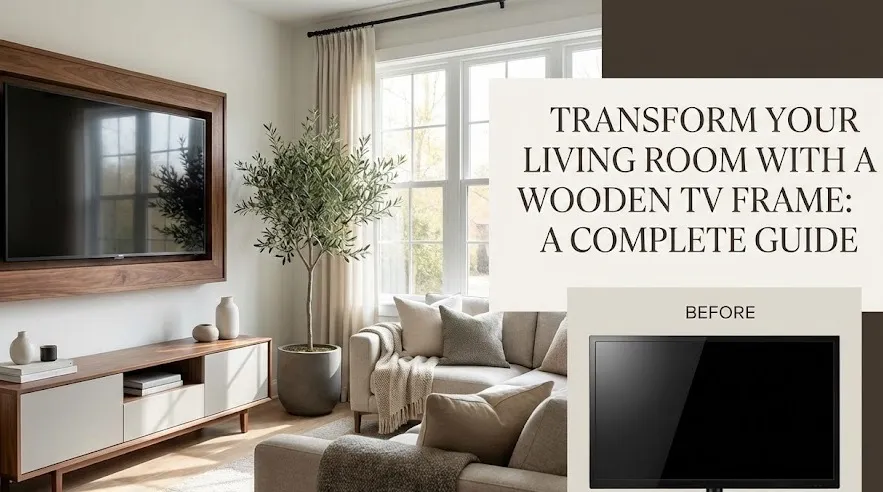
This simple yet brilliant design trend is taking the home decor world by storm. By wrapping your cold, plastic television in the warmth of natural wood, you instantly turn a piece of technology into a piece of art. Whether you are a DIY enthusiast or looking to buy a custom piece, this guide will tell you everything you need to know about upgrading your space with a wooden frame.
Why You Need a Wooden TV Frame
You might be thinking, “Is it really worth framing my TV?” The short answer is: absolutely. Here is why this small change makes a massive difference.
1. It Softens the Look of Technology
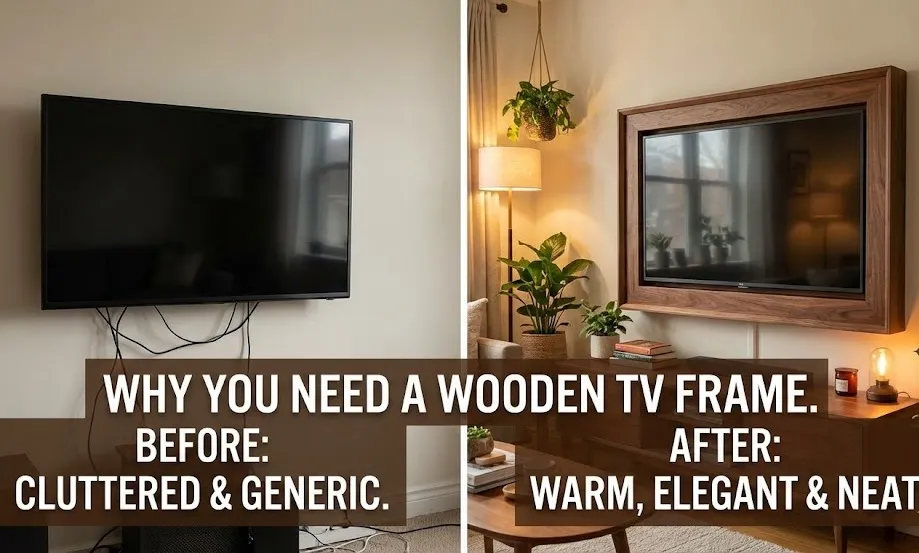
Most modern homes are filled with gadgets, wires, and plastic screens. While functional, they often clash with homey aesthetics like farmhouse, boho, or mid-century modern styles. A wooden TV frame acts as a bridge between high-tech and high-comfort, making your TV look like it actually belongs in the room.
2. It Creates a Focal Point
Instead of your eye being drawn to a black void on the wall, a frame draws the eye to the craftsmanship and texture of the wood. It allows your television to function more like a framed painting or a mirror, especially if you use screen savers that display art.
3. It Hides the Ugly Parts
Depending on the design, a custom frame can help conceal the side bezels, the manufacturer’s logo, and sometimes even the messy cables dangling from the back. It creates a clean, polished look that screams “custom-made.”
Choosing the Right Style for Your Home

Not all wood frames are created equal. The beauty of a wooden TV frame is that it can be customized to match your existing furniture. Here are a few popular styles to consider:
The Rustic Farmhouse Look
If your home features shiplap, cozy throws, and vintage finds, a rustic frame is your best bet.
- Wood Type: Reclaimed barn wood or distressed pine.
- Finish: Raw, stained dark walnut, or whitewashed.
- Vibe: Warm, lived-in, and textured.
The Modern Minimalist
For those who prefer clean lines and sleek surfaces, you want a frame that doesn’t add too much bulk.
- Wood Type: Maple, Oak, or Birch.
- Finish: Clear matte coat or light stain.
- Vibe: Airy, Scandinavian, and sophisticated.
The Gold-Accented Classic
If you want your TV to look like a literal piece of museum art (similar to the popular Samsung “The Frame” TV style), you might opt for a wood frame with ornate molding.
- Wood Type: Milled trim pieces.
- Finish: Painted gold, black, or mahogany.
- Vibe: Elegant, traditional, and expensive-looking.
DIY vs. Buying: Which is Better?
When it comes to getting a wooden TV frame, you have two main paths. Both have their pros and cons.
Option A: The DIY Route
If you have a miter saw and a free Saturday, building your own frame is incredibly rewarding and cost-effective.
Pros:
- You save significant money.
- You get the exact dimensions for your specific TV model.
- You can choose the exact stain to match your coffee table.
Cons:
- Requires tools (saw, clamps, wood glue).
- Requires precise measuring (one wrong cut and the frame won’t fit).
Option B: Buying Custom
There are many sellers on platforms like Etsy or specialized websites that build frames specifically for common TV models.
Pros:
- Guaranteed fit and finish.
- No sawdust in your living room.
- Easy clip-on installation options are often available.
Cons:
- Can be expensive (often $150+).
- Shipping large frames can be risky.
Simple Steps to DIY Your Own Wooden TV Frame
If you have decided to get your hands dirty, here is a very simple overview of how to build a basic frame.
Step 1: Measure Twice
This is the most critical step. Measure the height and width of your TV’s outer edge. You also need to measure the depth of the TV so you know how thick the side pieces of the frame need to be.
Step 2: Choose Your Molding
Head to your local hardware store. You can use standard “L-molding” (corner guards) for a sleek look, or flat boards for a chunkier frame. Ensure the wood is straight and not warped.
Step 3: Cut the Corners
You will need to cut the wood at a 45-degree angle so the corners meet perfectly (just like a picture frame).
Step 4: Assemble
Use wood glue and small finish nails to connect the corners. Pro Tip: Don’t glue the frame directly to the TV! Build the frame as a separate unit that slides over the TV.
Step 5: Secure the Frame
How do you keep it on the TV? A popular method is attaching elastic bands to the back of the frame that stretch around the back of the TV. Alternatively, some DIYers use heavy-duty velcro strips.
Important Considerations Before You Start

Before you rush out to buy lumber, keep these safety and functionality tips in mind.
- Do Not Block the Sensor: Most TVs have a remote control sensor (IR receiver) at the bottom. If your wooden TV frame covers this, your remote won’t work. You may need to drill a small hole or leave a gap in the wood design.
- Ventilation is Key: TVs generate heat. Ensure your frame isn’t so tight that it blocks the vents on the back or sides of the television. Overheating can shorten the lifespan of your electronics.
- Weight Matters: If your TV is mounted on an articulating arm (one that pulls out from the wall), make sure the extra weight of the wood won’t cause the arm to sag.
Conclusion
Upgrading your entertainment space doesn’t require a massive renovation budget. A wooden TV frame is one of those high-impact, low-effort projects that completely changes the vibe of a room. It takes the focus away from the “black box” of technology and puts it back on the warmth and style of your home.
Whether you decide to build a rustic frame from reclaimed pallet wood or order a sleek modern frame online, the result is the same: a living room that feels more curated, cozy, and intentionally designed.
So, are you ready to turn your TV into a masterpiece?