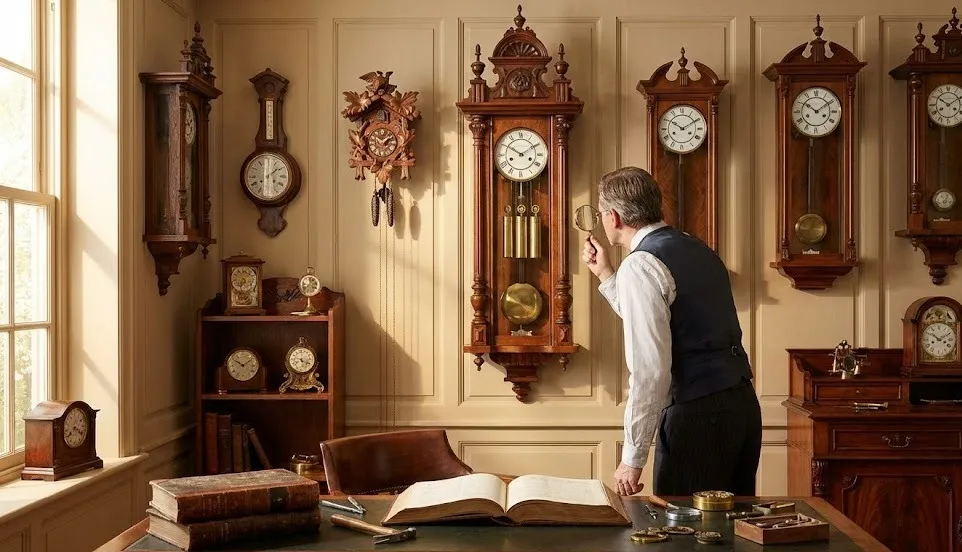
There is something undeniably magical about the rhythmic tick-tock of an old clock. It’s a sound that feels like a heartbeat, filling a quiet room with a sense of life and history. While modern digital clocks are convenient, they lack the soul and craftsmanship of the past. This is exactly why antique wall clocks from the 1800s remain so sought after by collectors and interior designers alike.
The 19th century was a revolutionary time for horology (the study of time). It was an era where timekeeping transitioned from a luxury for the ultra-rich to a household necessity. But more than just tools, these clocks were pieces of art. Whether you are a seasoned collector or someone who just inherited a dusty piece from a grandparent, understanding the value and history of these timepieces is a fascinating journey.
In this guide, we will walk through the styles, the history, and the secrets to identifying genuine antique wall clocks from the 1800s.
Why the 1800s Was the Golden Age of Wall Clocks

To understand the value of these items, we have to look at the context. The 1800s spanned the Victorian era and the Industrial Revolution. This combination created a perfect storm for clockmaking.
On one hand, you had the artisan craftsmanship of the early 1800s, where every gear and cabinet was made by hand. On the other hand, the late 1800s saw the rise of mass production, allowing companies like Seth Thomas and Ansonia to bring beautiful clocks into middle-class homes.
When you hang one of these pieces on your wall, you aren’t just hanging a clock; you are displaying a survivor of history. These clocks have ticked through wars, economic depressions, and the turn of two centuries.
Popular Styles of Antique Wall Clocks from the 1800s
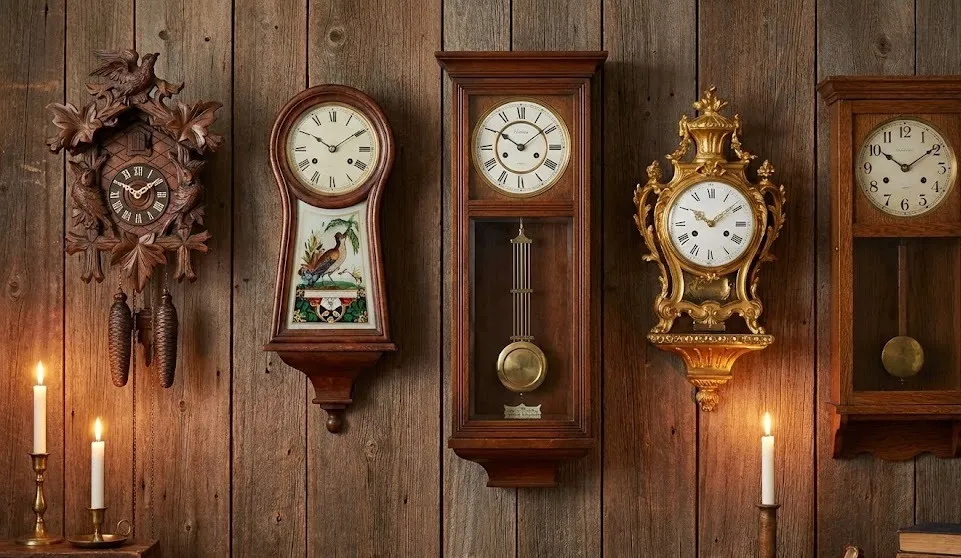
Not all clocks from this century look the same. The design trends shifted drastically from 1800 to 1899. If you are in the market for antique wall clocks from the 1800s, here are the specific styles you should know.
1. The Vienna Regulator
Originating in Austria and Germany, the Vienna Regulator is often considered the “Rolls Royce” of wall clocks.
- Appearance: Tall, slender, and glazed with glass on the front and sides.
- Features: They usually feature weight-driven movements and highly accurate pendulums.
- Why they are special: They were designed for precision. In the mid-1800s, if you needed to know the exact time, you looked at a Regulator.
2. The American Banjo Clock
Invented by Simon Willard, this is a uniquely American style that became incredibly popular in the early 19th century.
- Shape: As the name suggests, it looks like an inverted banjo. It has a round face, a long throat, and a rectangular box at the bottom.
- Decor: The throat and bottom box often feature reverse-painted glass (eglomise) depicting patriotic scenes or floral patterns.
3. The Drop Dial (Schoolhouse Clock)
If you have ever seen a classic round clock with a short, hanging trunk at the bottom, you’ve likely seen a Drop Dial.
- Usage: These were the workhorses of the late 1800s, found in railway stations, schoolhouses, and offices.
- Material: Usually made of oak or mahogany, known for being sturdy and reliable.
4. The Cuckoo Clock
While Cuckoo clocks originated in the Black Forest of Germany in the 1700s, they exploded in popularity during the mid-to-late 1800s.
- Design: Intricate wood carvings of leaves, birds, and hunting scenes.
- Mechanism: The iconic bird popping out to chirp the hour is a mechanism that has charmed families for generations.
How to Identify an Authentic 19th-Century Clock
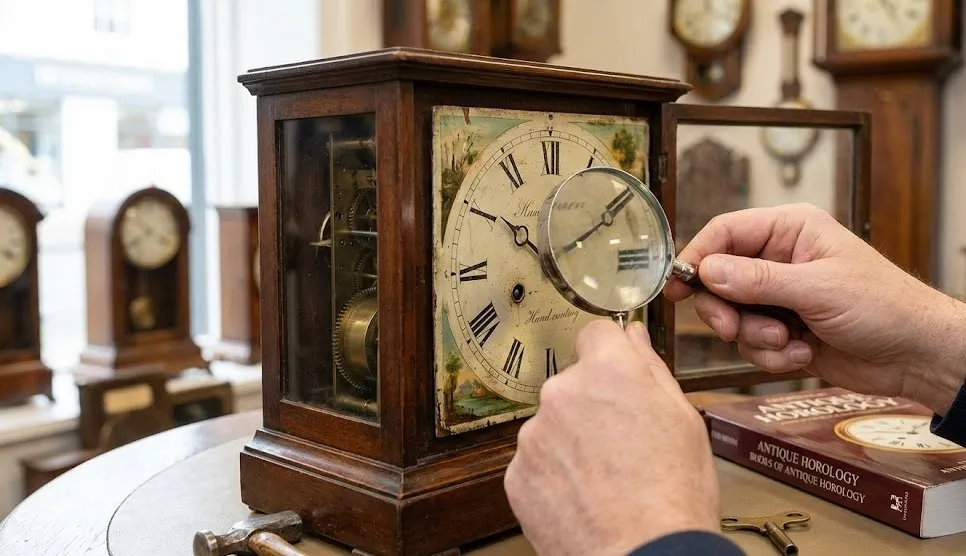
In the world of antiques, reproductions are everywhere. You might see a “vintage style” clock at a home goods store that looks old but was made last year in a factory. So, how can you tell if you are looking at genuine antique wall clocks from the 1800s?
Here are a few clues to look for:
Examine the Label
Many American clockmakers in the 1800s pasted a paper label inside the case.
- Look for names like: Seth Thomas, Elias Ingraham, Ansonia, or Waterbury.
- Condition: If the paper looks too white or the font looks modern, be suspicious. Genuine labels will be yellowed, peeling, or faded.
Check the Hardware
- The Screws: Modern screws have perfectly even slots and smooth heads. Screws from the early to mid-1800s were often hand-finished, meaning the slots might be slightly off-center.
- The Glass: Old glass is rarely perfect. If you look at the glass door from an angle, you might see “waviness” or tiny bubbles. This is a good sign of age.
The Movement (The Gears)
Open the clock face if possible. Clocks from this era used brass movements held together with pins or screws. If you see plastic gears or a battery compartment, it is definitely a modern reproduction!
Determining Value: What is Your Clock Worth?
One of the most common questions is, “I found this old clock in the attic; is it worth anything?” The value of antique wall clocks from the 1800s varies wildly, from $50 to over $10,000.
The value depends on three main factors:
- Maker: A signed Simon Willard Banjo clock is worth significantly more than a mass-produced generic kitchen clock from the 1890s.
- Condition: Does it run? Is the wood case cracked? Are the original glass panels intact? Collectors prefer clocks in “original” condition, meaning the finish hasn’t been stripped and repainted.
- Intricacy: Generally, the more complicated the movement (e.g., does it chime on the quarter-hour? Does it have a calendar function?), the higher the value.
Pro Tip: Never use harsh chemical cleaners on the wood or brass of an antique clock. You can accidentally strip away the “patina” (the aged look), which can destroy up to 50% of the clock’s value instantly.
Caring for Your Antique Clock
If you are lucky enough to own one of these treasures, maintenance is key. Unlike modern electronics, these machines need physical care to keep running.
- Winding: Most wall clocks from this era are “8-day” clocks, meaning they need to be wound once a week. Create a routine wind your clock every Sunday morning.
- Leveling: Wall clocks rely on gravity for the pendulum to swing evenly. If the clock is tilted on the wall, it will tick unevenly and eventually stop. Listen for an even tick… tock… tick… tock. If it sounds like a galloping horse (tick-tock… tick-tock), the clock is not level.
- Oiling: Every 3 to 5 years, the movement should be oiled by a professional. The oil in these clocks eventually turns to sludge, which can grind down the brass gears.
Final Thoughts
Collecting antique wall clocks from the 1800s is about more than just telling time. It is about becoming a custodian of history. These clocks witnessed the world change from horse-drawn carriages to automobiles, and from candlelight to electricity.
Whether you are looking for a stately Vienna Regulator for your hallway or a rustic Schoolhouse clock for your kitchen, adding a 19th-century timepiece to your home adds warmth and character that no modern gadget can replicate.
So, the next time you hear that steady, rhythmic ticking, take a moment to appreciate the craftsmanship that has kept that heartbeat going for over a century.