Why We Love Elephant Decor
It is rare to find an animal that is universally loved across so many different cultures. Elephants represent strength, wisdom, memory, and perhaps most importantly good luck.
When you buy new, mass-produced decor, it often feels “soulless.” But vintage elephant figurines carry the weight of the past. Someone else dusted that figurine for thirty years. Someone else placed it on a windowsill hoping for good fortune. That human connection gives vintage items a warmth that modern plastic just can’t replicate.
The Symbolism of the Trunk
One of the first things collectors look at is the trunk. In the world of Feng Shui and general superstition, the position of the trunk matters immensely:
- Trunk Up: This is the most popular pose. An elephant with its trunk raised is said to shower good luck and fortune upon the home. It is a symbol of welcoming positive energy.
- Trunk Down: Far from being “bad luck,” a trunk down represents stability and grounding. It suggests that the elephant is gathering energy or storing wealth for the family.
- Intertwined Trunks: If you find a pair of vintage elephant figurines with their trunks twisted together, this symbolizes friendship and strong relationships.
Popular Materials for Vintage Elephants
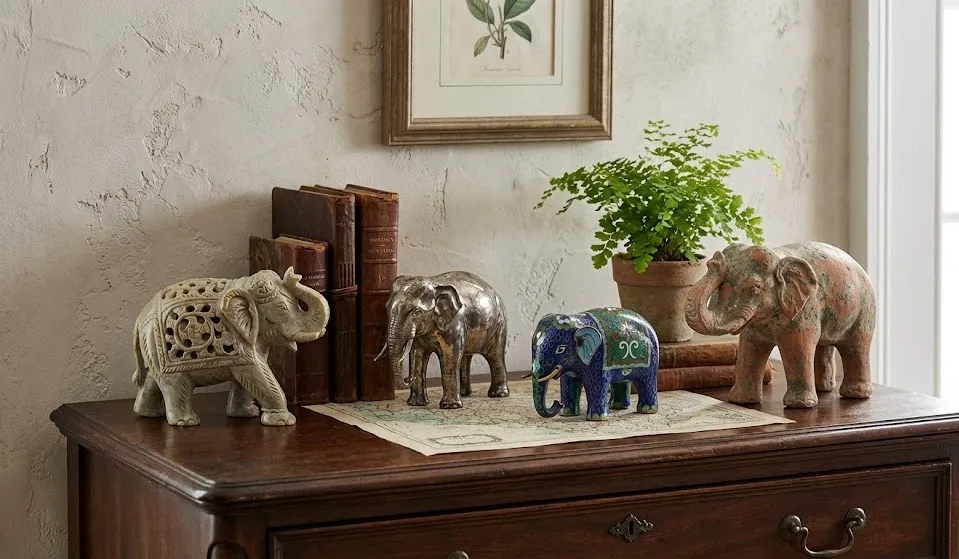
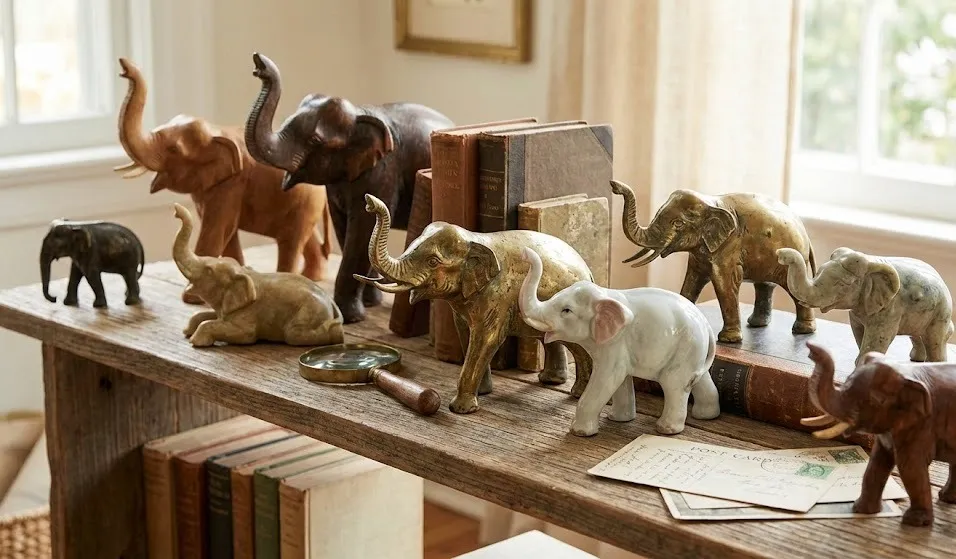
One of the joys of hunting for vintage elephant figurines is the sheer variety of materials used over the last century. Depending on where the piece was made, be it India, Africa, China, or Europe, the materials tell a story of origin.
1. Brass and Bronze
These are perhaps the most durable and sought-after types. Vintage brass elephants often come from India or Southeast Asia. They feel heavy in the hand and develop a beautiful, darkened “patina” over time.
- What to look for: Real vintage brass isn’t overly shiny. It should have darker spots where the air has oxidized the metal. If it looks like bright gold and feels light, it might be plated plastic or hollow modern metal.
2. Hand-Carved Wood
Wooden elephants have a rustic, earthy appeal. Teak, ebony, and sandalwood were commonly used in the mid-20th century.
- The details: Look closely at the carving. Older pieces were done by hand, meaning you might see tiny imperfections or chisel marks that add character. Modern tourist pieces are often machine-sanded to be perfectly smooth, which actually takes away some of the charm.
3. Porcelain and Ceramic
From delicate white porcelain with blue patterns (often Asian in origin) to colorful, kitschy ceramics from the 1950s and 60s, these breakable beauties are highly collectible.
- The risk: Always check the ears and tusks. These are the first parts to chip. However, a small chip on a rare vintage elephant figurine doesn’t always ruin its value, it just proves it has lived a life.
4. Soapstone and Jade
Stone carvings are cool to the touch and incredibly heavy for their size. Often, these feature an “elephant inside an elephant,” a complex carving technique that is mesmerizing to look at.
How to Spot a Genuine Vintage Piece
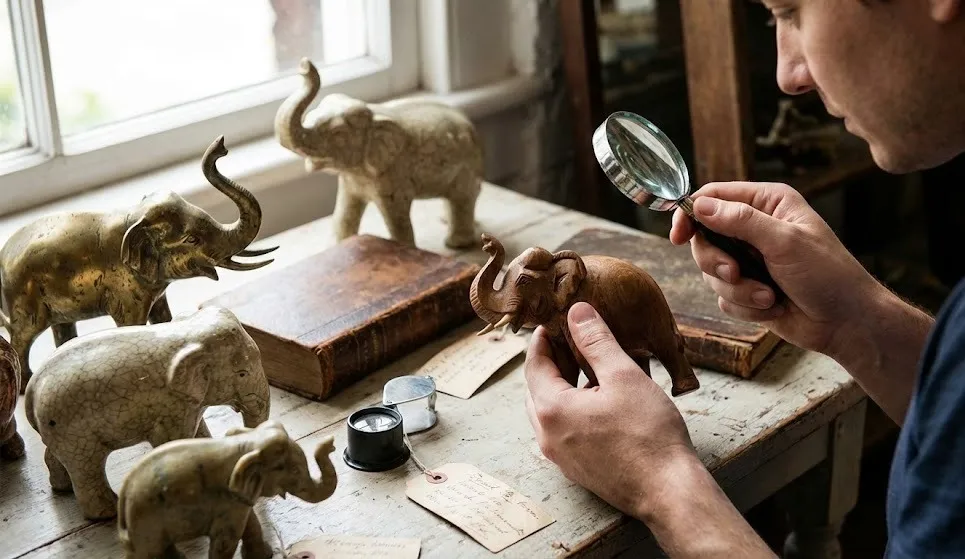
In a market flooded with reproductions, how do you know if you are buying a genuine antique or a cheap copy made last year? You don’t need to be a professional appraiser to spot the difference; you just need to use your senses.
- Check the Weight: Old things were usually built to last. A vintage metal or stone elephant should feel substantial. If you pick it up and it feels surprisingly light, put it back down.
- Look at the Base: Flip the figurine over. Does the bottom look too perfect? Vintage pieces often have felt pads that are worn down, or the bottom of the ceramic is unglazed and slightly discolored from sitting on shelves for decades.
- Search for Maker’s Marks: Look for stamps on the bottom. “Made in Occupied Japan” dates a piece to the late 1940s. A “Made in China” sticker usually indicates a newer piece (post-1980s), whereas an etched mark suggests older craftsmanship.
- Inspect the Patina: As mentioned earlier, metal should look aged. If a brass elephant looks like a brand-new penny, it’s likely a reproduction.
Styling Your Home with Vintage Elephants
Once you have acquired a few vintage elephant figurines, the next challenge is displaying them without making your home look like a cluttered museum. The goal is to integrate them naturally into your modern life.
The Entryway Greeting
According to Vastu and Feng Shui principles, the best place for an elephant is facing the front door. Placing a trunk-up elephant on an entryway console table is said to welcome luck and protect the home from negative energy entering.
The “Rule of Three”
Designers often use the “rule of three” for small decor items. Try grouping three elephants of different sizes together on a bookshelf. This creates a little family unit that looks visually pleasing. You can mix materials, too try placing a small brass elephant next to a taller wooden one for a nice contrast in textures.
The Office Companion
Since elephants symbolize wisdom and memory, they make excellent desk accessories. A heavy stone elephant can double as a paperweight, keeping your documents safe while adding a touch of old-world class to your workspace.
A Note on Ivory (The Elephant in the Room)
It is impossible to talk about vintage elephant figurines without addressing ivory. In the past, ivory was a common material. However, today, the trade of ivory is heavily restricted and unethical due to the harm caused to elephants.
- Our advice: Stick to “faux ivory” (celluloid or resin) or bone. Most ethical collectors avoid real ivory entirely. If you aren’t sure, assume it’s best to leave it be. There are plenty of beautiful wood, metal, and ceramic options that celebrate elephants without harming them.
Conclusion: The Thrill of the Hunt
Collecting is never really about the object itself; it is about the thrill of the hunt. It is about digging through a box at a garage sale and seeing that familiar silhouette. It is about cleaning off layers of dust to reveal a beautiful brass shine underneath.
Vintage elephant figurines are more than just decor. They are symbols of luck that have traveled through time to end up in your hands. Whether you believe in their spiritual power or just appreciate their aesthetic beauty, they bring a sense of stability and history to any room they inhabit.
So, the next time you spot a lonely elephant on a thrift store shelf, take a closer look. You might just be bringing a little bit of extra luck home with you.