Lighting is the unsung hero of interior design. It sets the mood, helps us work, and makes a house feel like a home. For decades, halogen bulbs were the gold standard for bright, crisp light that mimics natural daylight. But as technology has evolved and we’ve become more conscious of safety in our homes, a common question arises: are halogen lamps safe to use in a modern household?
The short answer is yes, they can be safe, but they come with a specific set of rules and risks that you need to respect. Unlike the cool-to-the-touch LED bulbs we see everywhere today, halogen lamps are powerful pieces of technology that rely on high heat to function.
In this guide, we are going to dive deep into the mechanics of halogen lighting. We will look at the fire risks, the “don’t touch” rule, and whether you should stick with halogen or make the switch to newer tech.
Understanding How Halogen Lamps Work
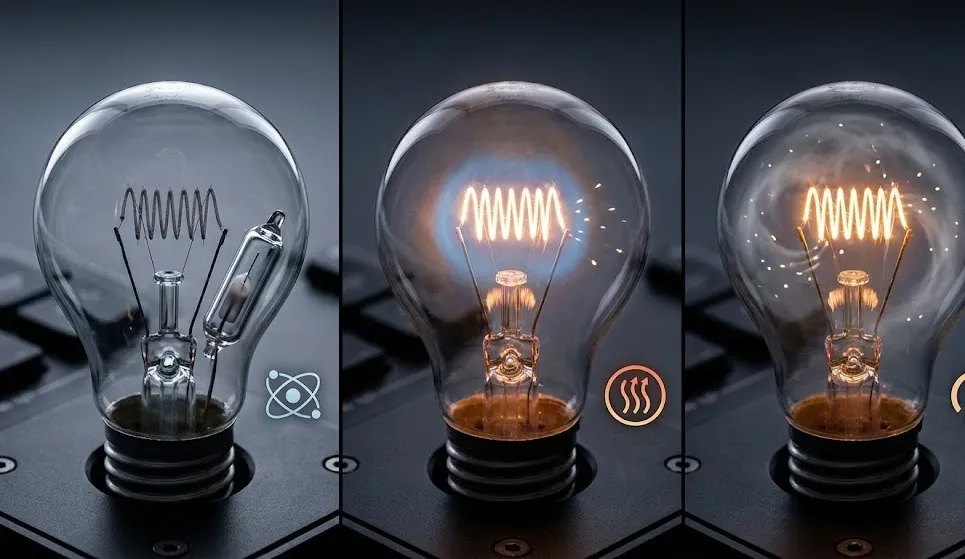
To understand the safety profile, we first need to understand the bulb itself. Halogen bulbs are actually a type of incandescent lamp. Inside the quartz envelope, there is a tungsten filament and a small amount of halogen gas (like iodine or bromine).
This combination creates a chemical reaction known as the “halogen cycle.” This cycle allows the bulb to burn brighter and last longer than a standard old-school light bulb. However, for this cycle to work, the bulb must reach extremely high temperatures. This is where the primary safety conversation begins.
The Big Concern: Heat and Fire Hazards
When people ask, “are halogen lamps safe?”, they are usually worried about heat. It is a valid concern. Halogen bulbs operate at incredibly high temperatures, often reaching between 900°F to 1,200°F (482°C to 650°C) on the surface of the bulb.
To put that into perspective, paper creates a flash fire at 451°F.
The Torchiere Lamp Issue
In the 1990s, halogen floor lamps (often called torchieres) were extremely popular. Unfortunately, they were also linked to numerous house fires. Because the bulb faces upward and gets so hot, if a curtain blew onto it, or a cat knocked it over onto a carpet, ignition could happen in seconds.
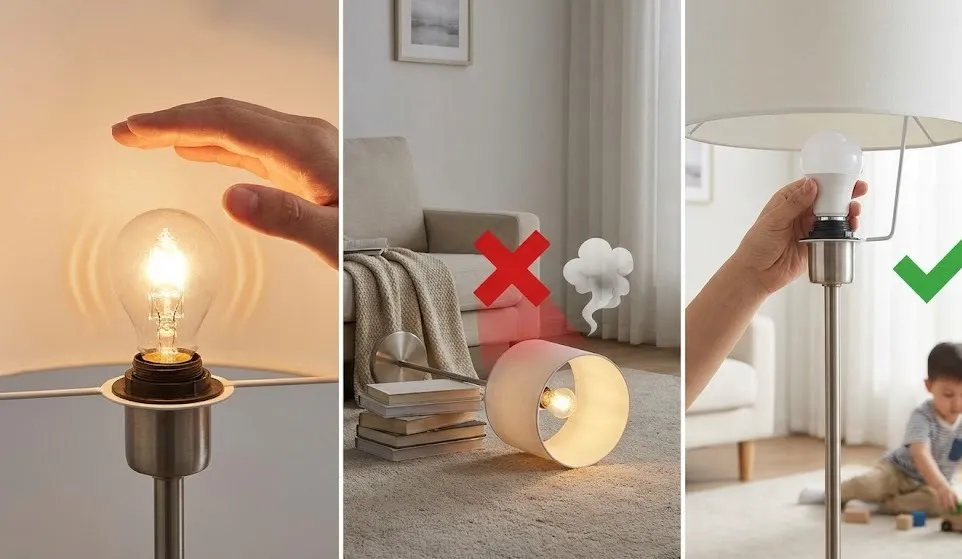
While modern fixtures have wire guards and glass shields to mitigate this, the core risk remains: Halogen bulbs get hot enough to burn skin and ignite flammable materials.
The “Touch Rule”: Why You Can’t Use Bare Hands
Have you ever been told never to touch a halogen bulb with your bare fingers? This isn’t just an old wives’ tale; it is a crucial safety tip.
Our skin has natural oils. If you touch the quartz glass of a halogen bulb, you leave behind a fingerprint made of oil. When you turn the lamp on, the massive heat causes that oil to heat up unevenly compared to the rest of the glass.
This creates a “hot spot” on the bulb. The result?
- The bulb creates a weak point.
- The life of the bulb is shortened significantly.
- In rare cases, the bulb can actually shatter or explode.
Safety Tip: If you must change a halogen bulb, always use a clean cloth or wear gloves. If you accidentally touch it, clean it with alcohol before turning it on.
UV Radiation: Is It a Hidden Danger?
Another angle to consider when asking “are halogen lamps safe” is the emission of ultraviolet (UV) radiation. Because halogen bulbs burn so hot, they do emit some UV light, specifically UV-B and UV-C, which are potentially harmful to skin and eyes in large doses.
However, there is no need to panic.
- Built-in Protection: Most household halogen bulbs have a UV-stop additive in the quartz or are covered by an outer glass casing that blocks harmful UV rays.
- Distance Matters: The amount of UV radiation drops off significantly the further you are from the light source. Unless you are staring directly into a high-powered desk lamp from two inches away for hours, the risk is minimal.
Halogen vs. LED: The Safety Showdown
In the current market, you can’t discuss halogen safety without comparing it to Light Emitting Diodes (LEDs).
| Feature | Halogen Lamps | LED Lamps |
| Heat Emission | Very High (Fire risk if covered) | Very Low (Safe to touch) |
| Breakability | High (Fragile quartz/glass) | Low (Solid-state plastic/glass) |
| Mercury Content | None | None |
| Explosion Risk | Low (if oil touches glass) | None |
| Energy Efficiency | Low (Wastes energy as heat) | High (90% more efficient) |
While halogen lamps are free of toxic mercury (unlike CFLs), LEDs win the safety battle simply because they run cool. You could leave an LED bulb on for days and touch it without getting burned.
Safety Tips for Halogen Lamp Users
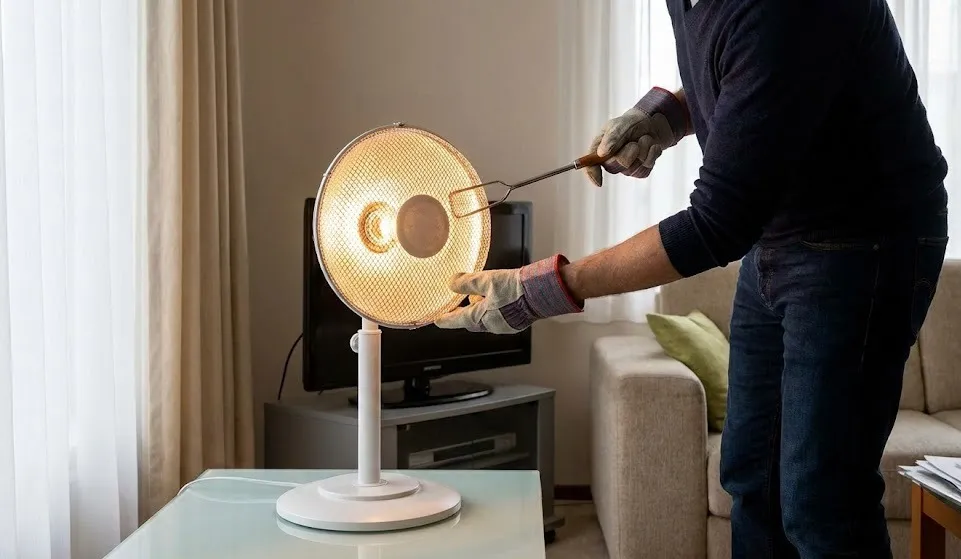
If you love the warm, perfect color rendering of halogen light and want to keep using them, you absolutely can. You just need to follow strict safety protocols.
Here is a checklist to ensure your home stays safe:
- Check the Wattage: Never put a halogen bulb in a fixture that isn’t rated for it. If a lamp says “Max 60W,” do not put a 100W halogen bulb in it. The excess heat can melt the fixture’s wiring.
- Use Guards: Ensure your floor lamps have a wire or glass grid over the bulb. This prevents curtains, bedding, or clothing from falling directly onto the hot bulb.
- Keep Clear: Keep halogen lamps at least three feet away from curtains, drapes, and bedding.
- Stable Placement: Place lamps on flat, stable surfaces where they cannot be easily knocked over by children or pets.
- Let it Cool: Never attempt to change a halogen bulb immediately after turning it off. Wait at least 10 to 15 minutes for it to cool down.
So, Are Halogen Lamps Safe? The Verdict
It is time to answer the big question once and for all: are halogen lamps safe?
Yes, they are safe, provided they are treated with respect and used in the correct fixtures. They are not “dangerous” in the sense of being toxic or radioactive. However, they introduce a fire and burn hazard that modern LED bulbs simply do not have.
If you have young children or energetic pets, or if you are placing a lamp near curtains, a halogen bulb might not be the wisest choice. The heat they generate is wasted energy that turns into a potential hazard.
The Human Perspective
We all love a cozy home. There is something nostalgic about the intense brightness of a halogen work light or the warm glow of a living room dimmer. But peace of mind is part of a cozy home, too.
If you are constantly worrying about whether the lamp is too close to the sofa, it might be time to switch to a “warm white” LED. You get the same glow without the heat.
Conclusion
Halogen technology has served us well for a long time, bridging the gap between old incandescent bulbs and the modern LED era. While they are still available and used for specific purposes (like oven lights or high-CRI display lighting), they require a level of vigilance that other bulbs don’t.
By understanding the risks, specifically the high heat and the sensitivity to skin oils, you can use them safely. However, for general household use, the industry is moving toward LED for a reason: they remove the fire risk almost entirely.