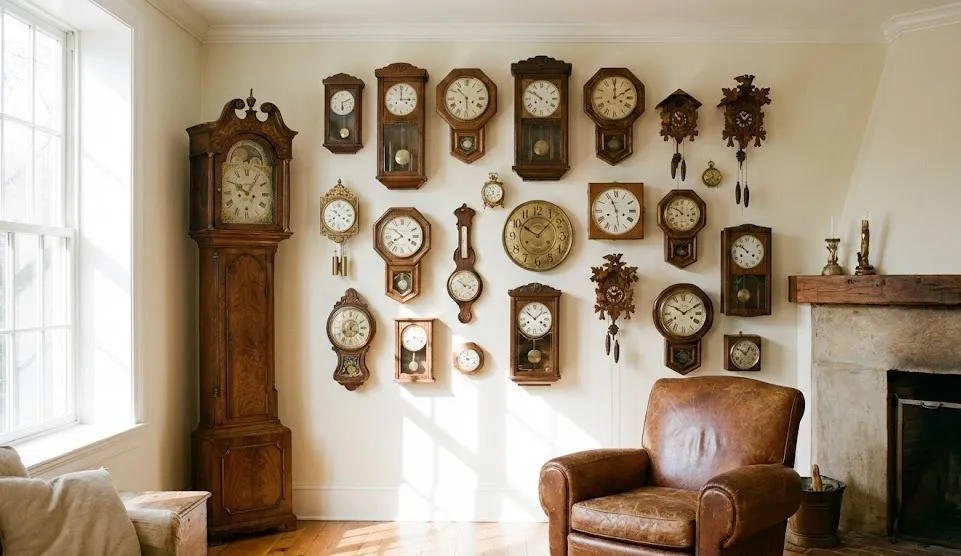
in today’s world, we are surrounded by digital screens. From our smartphones to our microwaves, everything glows with a digital timestamp. Yet, there is something deeply satisfying about looking up at a wall and seeing an actual clock face, with hands ticking away the moments. It brings a sense of calm and structure to a home.
But we aren’t talking about just any plastic clock you grab from the discount aisle. We are talking about character. We are talking about history.
Choosing the right vintage wall clocks for living room decor isn’t just about telling time; it is about making a statement. Whether you live in a modern apartment or a cozy cottage, a vintage timepiece acts as a functional piece of art that anchors your space. In this guide, we will explore why these classic pieces are making a huge comeback, how to pick the right style, and where to hang them for maximum impact.
Why Choose a Vintage Wall Clock?
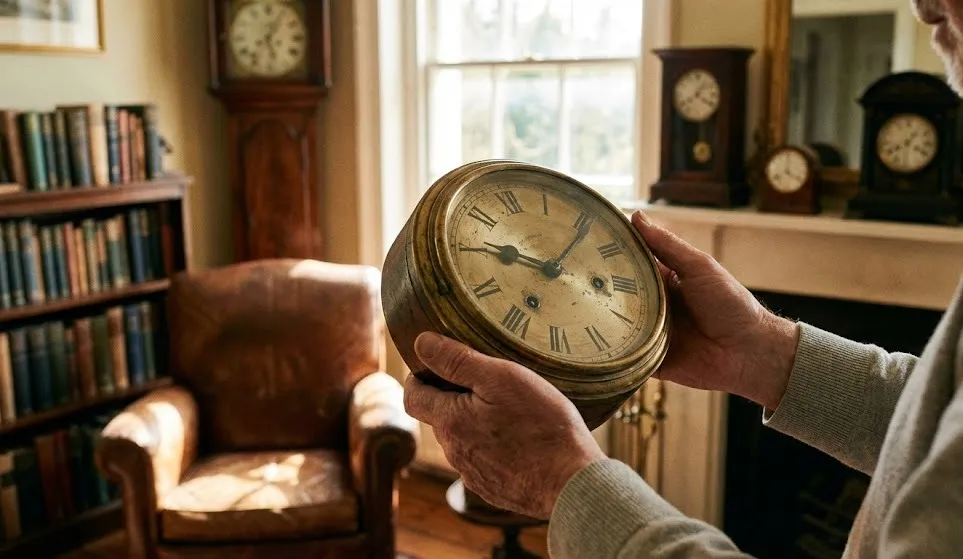
You might be wondering, “Why go vintage when I can buy a smart clock?” The answer lies in the feeling the object creates.
Vintage wall clocks for living room spaces offer a warmth that digital devices simply cannot match. They serve as a focal point, a conversation starter. When guests walk in, their eyes are naturally drawn to the unique textures, the aged wood, or the intricate metalwork of a classic timepiece.
Here are a few reasons why homeowners are falling in love with vintage clocks all over again:
- Nostalgia: They remind us of a simpler time, perhaps a grandmother’s kitchen or an old schoolhouse.
- Craftsmanship: Older clocks (or high-quality vintage reproductions) often feature better materials like solid wood, brass, and glass rather than cheap plastic.
- Aesthetic Balance: They provide a perfect counter-balance to large, black TV screens, softening the look of a living area.
Top Styles of Vintage Wall Clocks for Living Room
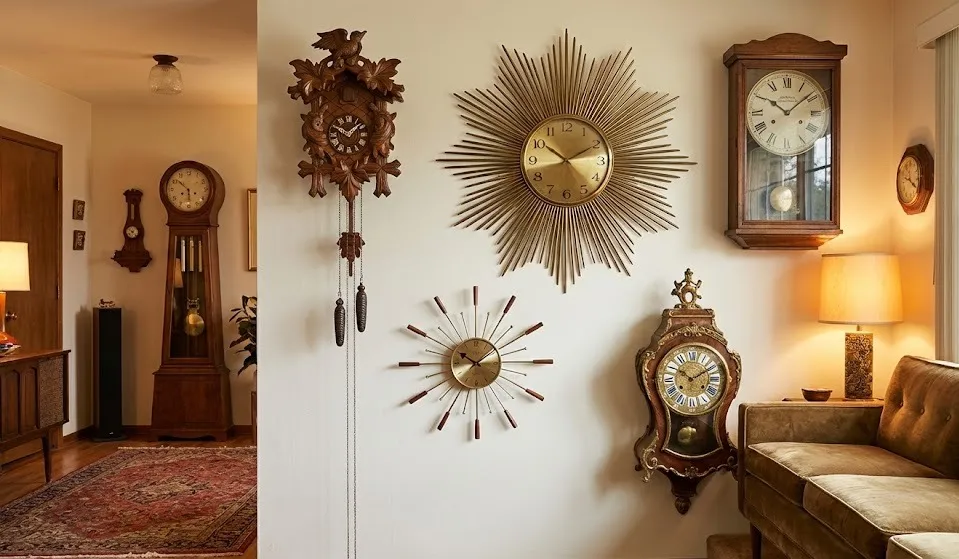
The term “vintage” covers a wide range of eras. To find the perfect match for your home, you need to know which specific style speaks to you. Here is a breakdown of the most popular designs.
1. The Mid-Century Modern “Starburst”
If you love the vibe of the 1950s and 60s, this is the clock for you. Often called “sunburst” or “atomic” clocks, these feature a central face with spikes radiating outward like the sun’s rays.
- Materials: Teak wood, brass, and sometimes colorful metal tips.
- Best For: Minimalist living rooms or spaces with retro furniture. They act more like a piece of sculpture than a utility item.
2. The Rustic Farmhouse Clock
This is currently one of the most popular styles of vintage wall clocks for living room setups. These clocks are usually large, round, and feature distressed wood faces with Roman numerals.
- Materials: Whitewashed wood, wrought iron, and faded paint.
- Best For: Cozy, family-oriented living rooms with soft sofas and neutral colors.
3. The Victorian Station Clock
Imagine the old clocks hanging in a bustling London train station in the 1800s. These are often double-sided and hang from a decorative metal bracket perpendicular to the wall.
- Materials: Black iron casings and cream-colored dials.
- Best For: Adding a touch of European elegance or filling a narrow wall space between two rooms.
4. The Antique Pendulum Schoolhouse Clock
These are the classic, octagonal clocks with a drop-down case where a brass pendulum swings back and forth. They have a rhythmic, soothing tick-tock sound that brings life to a quiet room.
- Materials: Dark oak or mahogany wood with glass fronts.
- Best For: Traditional living rooms or spaces that include a library or reading nook.
How to Place Your Clock for Maximum Impact
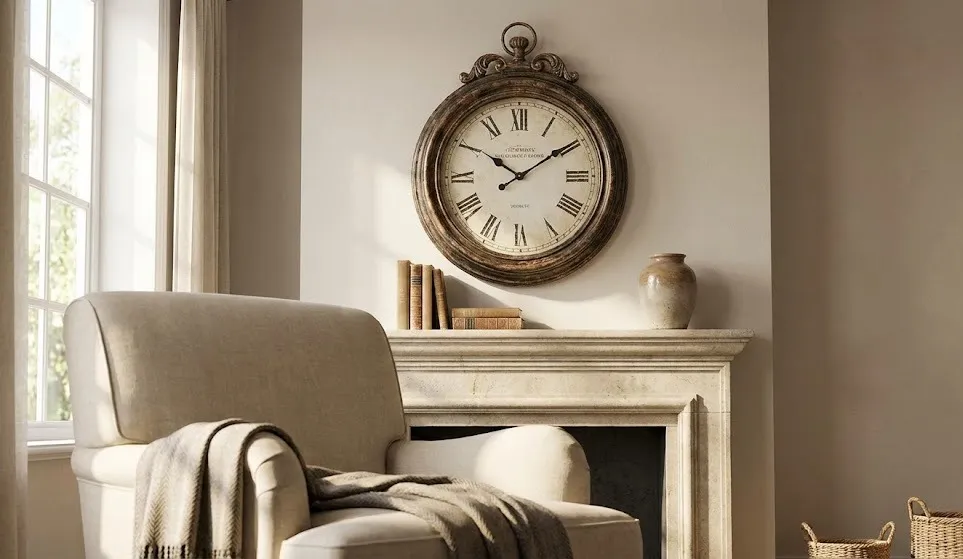
Buying one of the best vintage wall clocks for living room decor is only step one. Step two is figuring out where to put it. Placing a clock incorrectly can make a room feel cluttered or off-balance.
Here are some pro tips for placement:
The “Rule of Eye Level”
Generally, artwork should be hung at eye level. However, clocks often sit slightly higher. A good rule of thumb is to have the center of the clock about 60 to 65 inches from the floor. If it is hanging above a sofa or a mantle, ensure there is at least 6 to 8 inches of breathing room between the furniture and the clock.
Create a Gallery Wall
Don’t be afraid to mix your clock with other items. A vintage clock looks fantastic surrounded by framed family photos, mirrors, or art prints. The round shape of the clock helps break up the square and rectangular lines of picture frames, creating a visually pleasing layout.
Above the Mantle
This is the classic “power spot.” Placing a large vintage clock above a fireplace mantle instantly commands attention. It anchors the room and draws the eye upward, making ceilings feel higher.
Mixing Old with New: Styling Tips
One common fear people have is that a vintage clock will make their home look like a museum or an antique shop. This doesn’t have to be the case! The secret is in the mix.
You can easily incorporate vintage wall clocks for living room designs into a modern home by following these simple styling rules:
- Contrast is Key: If you have a sleek, modern white wall, a distressed wooden clock adds necessary texture. If your room is full of soft fabrics, a metal industrial clock adds a cool edge.
- Color Coordination: Pick a clock that pulls a color from your rug or throw pillows. For example, if you have teal cushions, a clock with a subtle teal rim or patina will tie the room together.
- Don’t Overdo It: If you have a large statement clock, keep the rest of the wall relatively simple. Let the clock be the hero of that wall.
Maintenance and Care for Vintage Clocks
If you are lucky enough to own a genuine antique, it requires a little care. Even high-quality reproductions need maintenance to keep looking their best.
- Dust Gently: Use a soft microfiber cloth or a feather duster. Avoid harsh chemical sprays, especially on old wood or painted dials, as they can strip the finish.
- Check the Batteries: If it is a battery-operated quartz movement (common in reproductions), change the batteries once a year to prevent leakage and corrosion.
- Winding Mechanical Clocks: If you have a true mechanical wind-up clock, try to wind it at the same time every week. This keeps the internal springs in good tension and maintains accuracy.
Conclusion
Your living room is the heart of your home. It is where you unwind, entertain, and make memories. Adding one of these beautiful vintage wall clocks for living room walls does more than just tell you when your favorite show starts, it adds soul to the space.
Whether you choose a sleek mid-century starburst, a cozy farmhouse round, or a grand pendulum piece, the right clock serves as a timeless companion. So, take a look at that empty spot on your wall. Isn’t it time for an upgrade?