It starts around 3:00 PM. You have been staring at your monitor since the morning meeting. First, your eyes feel a little dry. Then, you find yourself squinting at the text on your spreadsheet. By the time you clock out, you have a dull headache right behind your eyes and your neck feels stiff.
Does this sound familiar? You are not alone.
In today’s digital age, we spend an incredible amount of time in front of displays. Whether you are a coder, a writer, a student, or a gamer, your eyes are under constant attack. While we often focus on ergonomic chairs for our backs or special mice for our wrists, we frequently ignore the most sensitive part of our body: our eyes.
This is why an eye protection computer screen cover is becoming an essential tool for modern workspaces. It is a simple addition to your setup, but it can make a massive difference in how you feel at the end of the day.
In this guide, we will explore what these covers actually do, why the light from your screen is hurting you, and how to choose the right one for your needs.
The Invisible Problem: Why Do Your Screens Hurt?

To understand why you need an eye protection computer screen cover, you first have to understand the enemy: Blue Light.
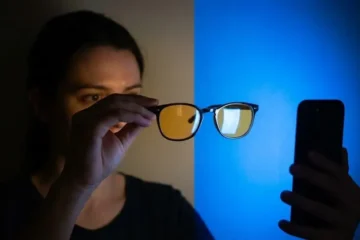
Computer monitors, laptops, and smartphones emit a high amount of “blue light.” This is a specific type of light on the color spectrum that has a very short wavelength and high energy.
In nature, we get blue light from the sun. It is actually good for us in moderation, it tells our bodies to wake up and be alert. However, the problem arises when we stare directly into an artificial source of blue light for 8, 10, or 12 hours a day.
Because blue light flickers more than other types of light, it creates a glare that reduces visual contrast. Your eyes have to work overtime to focus through this glare. This constant effort leads to a condition called Computer Vision Syndrome (CVS).
The symptoms of CVS include:
- Red, itchy, or dry eyes.
- Blurred vision.
- Headaches and migraines.
- Difficulty focusing.
- Disrupted sleep patterns.
This is exactly where an eye protection computer screen cover steps in to help.
How Does an Eye Protection Computer Screen Cover Work?
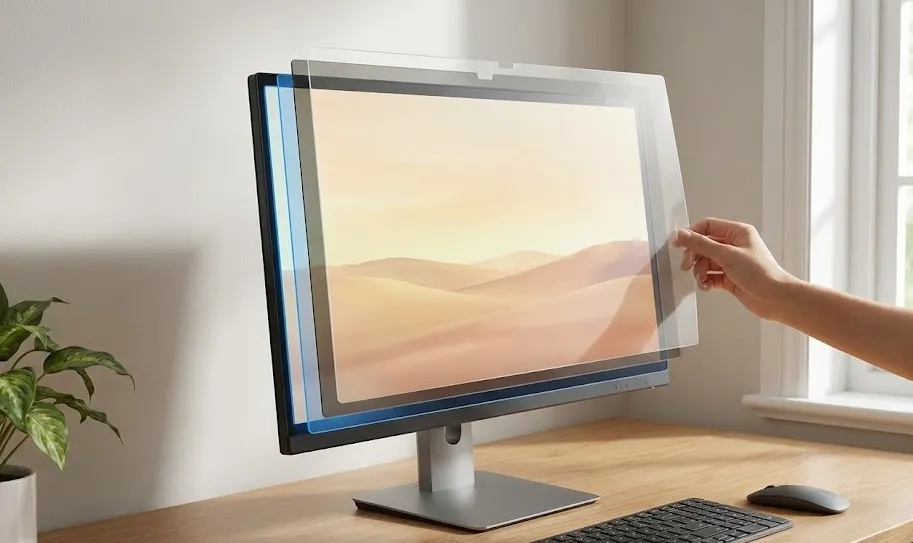
Think of this accessory as a pair of high-quality sunglasses for your monitor. It serves as a filter between the harsh digital light and your retinas.
When you install an eye protection computer screen cover, it selectively blocks or absorbs the harmful high-energy blue light (usually in the 380nm to 450nm range) while letting the “good” light pass through.
Here is how this simple tool transforms your work experience:
1. Drastic Reduction in Eye Strain
The most immediate benefit is comfort. By cutting out the harsh peaks of blue light, the screen cover softens the image. It eliminates the “flicker” that causes your eye muscles to strain. Many users report that their eyes feel significantly more relaxed and less “gritty” after just a few days of using a cover.
2. Improved Sleep Quality
This is a benefit many people don’t expect. Blue light suppresses the production of melatonin, the hormone that helps you sleep. If you work late at night without an eye protection computer screen cover, your brain thinks it is still daytime, making it hard to fall asleep. By filtering this light, you help preserve your natural sleep cycle.
3. Glare Reduction
Most high-quality covers come with a matte coating. If you work in an office with bright overhead fluorescent lights, or if you sit near a window, you know how annoying reflections can be. Glare forces you to squint and sit in awkward positions to see your screen. An eye protection computer screen cover diffuses these reflections, making the screen easier to read.
4. Physical Monitor Protection
Beyond health, there is a practical benefit. These covers act as a shield for your expensive hardware. They protect the delicate surface of your monitor from dust, oily fingerprints, scratches, and accidental splashes.
Types of Covers: Which One Should You Buy?
When you start shopping for an eye protection computer screen cover, you will generally encounter two main styles. Knowing the difference will help you make the right choice.
The Hanging Acrylic Panel
This is a hard, rigid sheet of acrylic that hangs over the top bezel of your monitor.
- Pros: It is incredibly easy to install, you just hang it up. It is durable and can be easily moved from one monitor to another. It offers excellent physical protection against impacts (great if you have kids or pets).
- Cons: It can be a bit bulky and might reflect some light if it doesn’t have a good anti-glare coating.
The Adhesive Film
This is a thin, flexible sheet that sticks directly onto the glass of your screen, similar to a screen protector for a smartphone.
- Pros: It is seamless and invisible once applied. It sits flush with the screen, providing excellent clarity.
- Cons: Installation requires patience to avoid air bubbles. Once removed, it usually cannot be reused.
How to Choose the Best Eye Protection Computer Screen Cover
Not all products on the market are created equal. To ensure you aren’t just buying a piece of cheap plastic, keep these factors in mind:
1. Check the Blue Light Blocking Percentage Look for a product that specifies how much blue light it blocks. A good eye protection computer screen cover should block at least 40% to 60% of harmful blue light. Be wary of products that don’t list any technical specs.
2. Verify the Dimensions “24-inch” is not a precise size. Monitors have different aspect ratios (16:9, 16:10, etc.). Before buying, take a measuring tape and measure the width and height of your visible screen area (excluding the plastic frame). Compare this with the product description to ensure a perfect fit.
3. Color Accuracy Some cheap covers turn your screen intensely yellow or orange. While this blocks blue light, it makes design work or photo editing impossible. Look for a cover that advertises “High Transmittance” or “True Color” so your viewing experience remains natural.
4. Anti-Glare Finish Ensure the product explicitly mentions “Anti-Glare” or “Matte Finish.” An eye protection computer screen cover that is glossy might actually increase eye strain by reflecting the room’s lights back at you.
Installation Tips for a Perfect Fit
If you choose the film-type cover, many people get nervous about air bubbles. Here is a simple process to get it right:
- Clean, Clean, Clean: Use a microfiber cloth and screen cleaning spray. Remove every single speck of dust. Even one tiny dust particle will create a bubble.
- Turn Off the Fan: Air movement blows dust around. Turn off fans and close windows before you start.
- Align Before Peeling: Hold the eye protection computer screen cover up to the screen to see exactly how it fits before you remove the backing.
- Peel Slowly: Peel back only an inch of the backing. Stick the top edge to the screen. Then, slowly pull the backing down while smoothing the film onto the screen with a squeegee or a credit card wrapped in a cloth.
Additional Habits to Save Your Eyes
While an eye protection computer screen cover is a powerful tool, it works best when combined with healthy digital habits.
- The 20-20-20 Rule: Every 20 minutes, take your eyes off the screen and look at something 20 feet away for at least 20 seconds. This relaxes the focusing muscle inside your eye.
- Blink Consciously: We tend to stop blinking when we focus deeply. Remind yourself to blink to keep your eyes moist.
- Adjust Your Brightness: Your screen should match the brightness of the room. It shouldn’t look like a light source glowing in a dark cave.
Conclusion
Your vision is one of your most valuable assets. You wouldn’t walk staring at the sun without sunglasses, so why stare at a bright monitor all day without protection?
Ignoring eye strain won’t make it go away. In fact, it usually leads to worsening vision and chronic headaches that kill your productivity. Investing in a high-quality eye protection computer screen cover is a small step that yields massive rewards for your health.
Whether you choose a hanging panel or an adhesive film, the important thing is to create a barrier between the harmful blue light and your eyes. Take a few minutes to measure your screen today, your eyes will thank you tomorrow.