Introduction
In the last few years, technology has changed the way we live, and one of the biggest transformations has been the rise of smart home devices. From smart bulbs that adjust with your mood to voice assistants that control your lights, locks, and thermostats, smart homes are no longer a luxury; they’re a lifestyle.
But with hundreds of devices available today, how do you choose the best smart home devices for your space? That’s exactly what this guide will help you with.
In this detailed buying guide, we’ll walk through what smart home devices are, why they matter, and how to select the best ones for your home based on your needs, budget, and compatibility.
What Are Smart Home Devices?
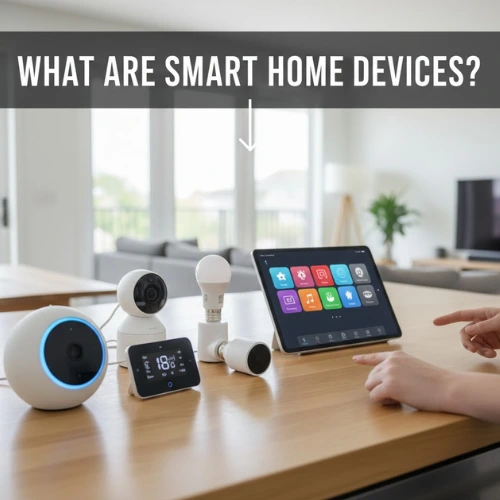
Smart home devices are gadgets that connect to your home Wi-Fi network and can be controlled remotely — usually through a smartphone app or a voice assistant.
They’re designed to make everyday tasks easier, safer, and more energy-efficient. For example:
- Smart lights let you control brightness and color with your phone.
- Smart plugs allow you to switch appliances on or off remotely.
- Smart thermostats help you manage heating and cooling automatically.
These devices use the Internet of Things (IoT) — a system that links devices and systems together to communicate and work smartly.
Why Invest in Smart Home Devices?
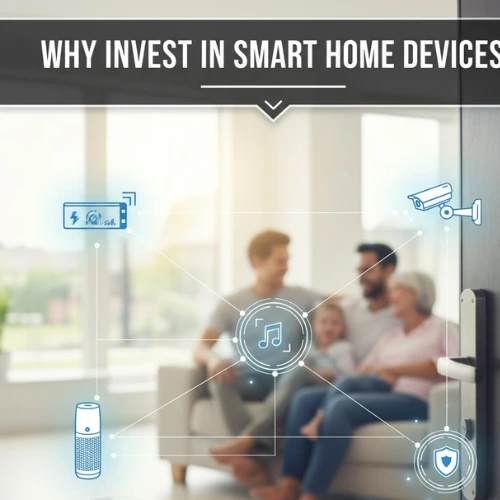
Before we jump into the buying guide, it’s important to understand why people love smart home technology. Here are the biggest advantages:
1. Convenience
Control your home from anywhere using your phone or voice commands. You can turn off lights, lock doors, or start your coffee maker while lying in bed or even when you’re away.
2. Energy Efficiency
Smart thermostats, plugs, and lighting systems help you save electricity by running only when needed. This can lower your monthly bills.
3. Security and Safety
With smart cameras, video doorbells, and locks, you can monitor your home 24/7 even when you’re miles away.
4. Comfort and Customization
Set your home to suit your lifestyle. For example, your living room lights can dim automatically when you start watching a movie.
5. Integration
Most smart devices can connect with others, creating a seamless and automated ecosystem. Your alarm can trigger the lights, or your motion sensor can alert your security system instantly.
How to Choose the Best Smart Home Devices
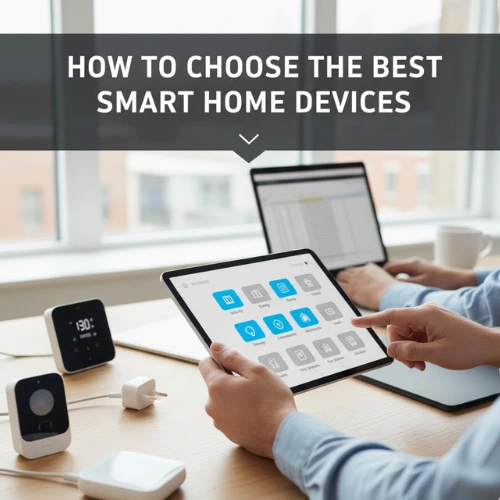
Now that you understand the benefits, let’s get into the most important part — how to choose the best smart home devices for your home.
1. Identify Your Needs and Lifestyle
Before buying, ask yourself:
- What tasks do I want to automate?
- Do I need more comfort, security, or energy efficiency?
- How tech-savvy am I?
If your goal is security, start with smart locks and cameras. For convenience, smart lights and plugs are great first options.
2. Check Compatibility with Your Ecosystem
Different smart home devices work best with certain ecosystems, such as:
- Amazon Alexa
- Google Home
- Apple HomeKit
If you already use Alexa or Google Assistant, ensure that your new devices support them. Mixing incompatible systems can lead to frustration later.
3. Focus on Connectivity and Standards
Look for devices that support common standards like:
- Wi-Fi – Easy to set up but can slow your network if too many devices connect.
- Zigbee or Z-Wave – Use less power and create more stable smart home networks.
- Matter (New Standard) – A new protocol designed to make all smart devices work together, regardless of brand.
4. Set a Budget
The best smart home devices come at many price points. You don’t have to buy everything at once. Start small with essential gadgets like:
- Smart lights
- Smart plugs
- Smart speakers
Then expand over time as you get comfortable with automation.
5. Prioritize Security and Privacy
Security is one of the biggest concerns in smart homes. Always:
- Choose trusted brands with regular software updates.
- Use strong passwords and enable two-factor authentication.
- Avoid unknown apps or third-party integrations that look suspicious.
6. Check for Easy Setup and User-Friendly Apps
The best smart home devices should be easy to install and use. Look for:
- Simple app interfaces
- Clear instructions
- Reliable customer support
A good app will let you control multiple devices from one place without confusion.
7. Think About Expandability
Your smart home system should grow with you. Choose devices that support future upgrades and can connect with new gadgets as technology evolves.
8. Look for Energy Efficiency Certifications
Devices with Energy Star or similar certifications consume less power, saving money in the long run.
Categories of the Best Smart Home Devices
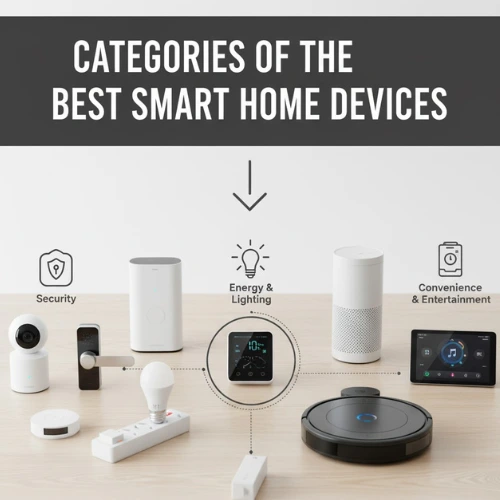
Let’s explore the main categories to help you decide which ones to start with.
1. Smart Lighting
Smart bulbs, switches, and lighting systems are a great entry point.
Benefits:
- Control brightness and color from your phone.
- Automate schedules — lights turn on or off at set times.
- Save energy using motion sensors or daylight detection.
2. Smart Speakers and Voice Assistants
These devices act as the “brains” of your smart home.
Uses:
- Control other smart devices using voice commands.
- Stream music, set reminders, and get weather updates.
- Integrate with other smart systems like thermostats and lights.
3. Smart Plugs and Switches
A smart plug makes any regular appliance smarter.
Benefits:
- Remote control via app.
- Set timers to turn off devices automatically.
- Monitor energy use.
4. Smart Security Systems
Protect your home with smart cameras, video doorbells, and locks.
Key Features:
- Real-time alerts and video feeds.
- Motion detection and night vision.
- Integration with alarms or emergency services.
5. Smart Thermostats
These devices automatically adjust temperature based on your schedule and preferences.
Advantages:
- Save on heating and cooling bills.
- Control temperature remotely.
- Some learn your habits and adjust automatically.
6. Smart Appliances
From refrigerators to washing machines, many home appliances now connect to Wi-Fi.
Benefits:
- Monitor and control your devices remotely.
- Get maintenance alerts or status updates.
- Improve convenience and efficiency.
7. Smart Sensors and Detectors
Smoke detectors, water leak sensors, and motion sensors add an extra layer of safety.
They can instantly alert you in case of danger, even when you’re not home.
Common Mistakes to Avoid When Buying Smart Home Devices
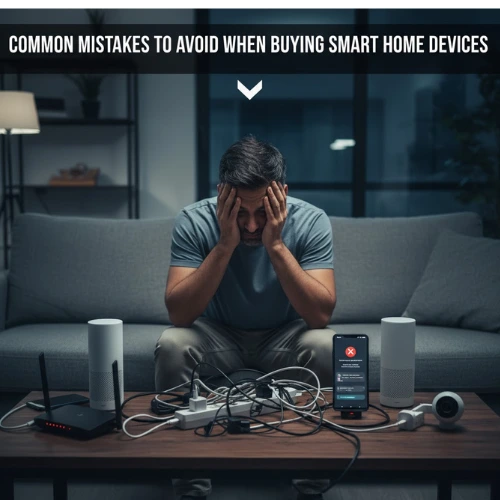
- Ignoring Compatibility: Always check if the device works with your chosen ecosystem.
- Skipping Security Settings: Many people forget to secure their smart devices don’t make that mistake.
- Overloading Wi-Fi: Too many Wi-Fi devices can slow down your internet. Consider using a hub-based system.
- Buying Too Much Too Soon: Start small, then expand. This saves money and helps you learn gradually.
- Not Reading Reviews: Always check user feedback and ratings before purchasing.
Smart Home Setup Tips for Beginners
- Start with one room: For example, automate your living room first.
- Use scenes: Create custom settings, like “Movie Mode” or “Good Night” to control multiple devices at once.
- Label devices clearly: Makes it easier to control them using voice commands.
- Keep firmware updated: Regular updates fix bugs and improve security.
- Experiment: Try new automations like lights turning on when you unlock the door.
The Future of Smart Homes

The future of smart home technology is exciting. With AI and machine learning, devices are becoming smarter every year.
Here’s what to expect:
- Greater Interconnectivity: Thanks to Matter, all brands will work together seamlessly.
- More Sustainable Homes: Smart devices will help reduce waste and energy use.
- Voice and Gesture Control: Future homes may rely less on phones and more on natural interaction.
- Predictive Automation: Devices will learn your habits to anticipate your needs.
Conclusion
Building a smart home doesn’t have to be complicated or expensive. The key is to start small, plan well, and choose the best smart home devices that match your needs.
Focus on compatibility, ease of use, and long-term value. Begin with simple upgrades like smart lights or plugs, and expand gradually into thermostats, cameras, and voice assistants.
A well-planned smart home not only makes your life more comfortable and efficient but also adds long-term value to your property.
So, take your time, research well, and let technology make your home truly smart.