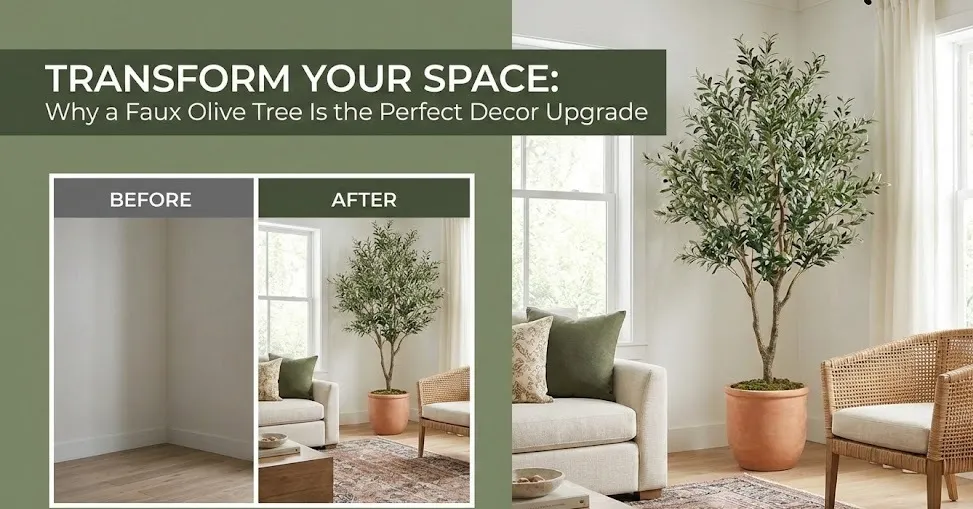
Have you ever scrolled through Instagram or Pinterest, admiring those gorgeous, sun-drenched living rooms that look like they belong in a magazine? If you pay close attention, you’ll notice one common element in almost all of them: a tall, airy, and sophisticated olive tree.
There is something undeniably charming about the olive tree. It brings a touch of the Mediterranean into your home, symbolizing peace and wisdom while adding a soft, organic texture to empty corners.
But here is the hard truth: keeping a real olive tree alive indoors is a nightmare. They are notoriously finicky. They drop leaves if you look at them the wrong way, they demand intense sunlight, and they attract pests.
This is where the faux olive tree comes in to save the day.
Gone are the days when artificial plants looked like shiny, cheap plastic. Today, high-quality artificial trees are so realistic that you have to touch the leaves to tell the difference. If you are looking to elevate your home decor without inheriting a part-time gardening job, here is why a faux olive tree should be your next purchase.
Why the Faux Olive Tree Trend Isn’t Going Anywhere
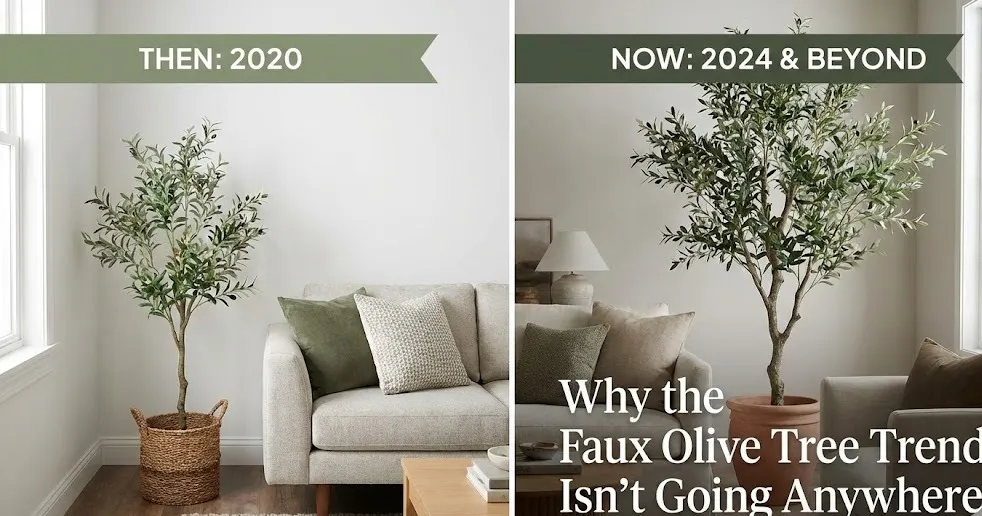
Trends come and go, but the olive tree has secured its spot as a timeless staple in interior design. Unlike the fiddle leaf fig, which is bulky and dark, the olive tree is delicate. Its sage-green leaves and thin branches allow light to pass through, making your room feel larger and airier rather than cluttered.
Whether your home style is Modern Farmhouse, Boho Chic, Scandinavian, or Minimalist, a faux olive tree fits right in. It acts as a neutral anchor—it’s green, but a muted, dusty green that complements beige, white, gray, and wood tones perfectly.
Real vs. Artificial: Why Faux Wins Every Time
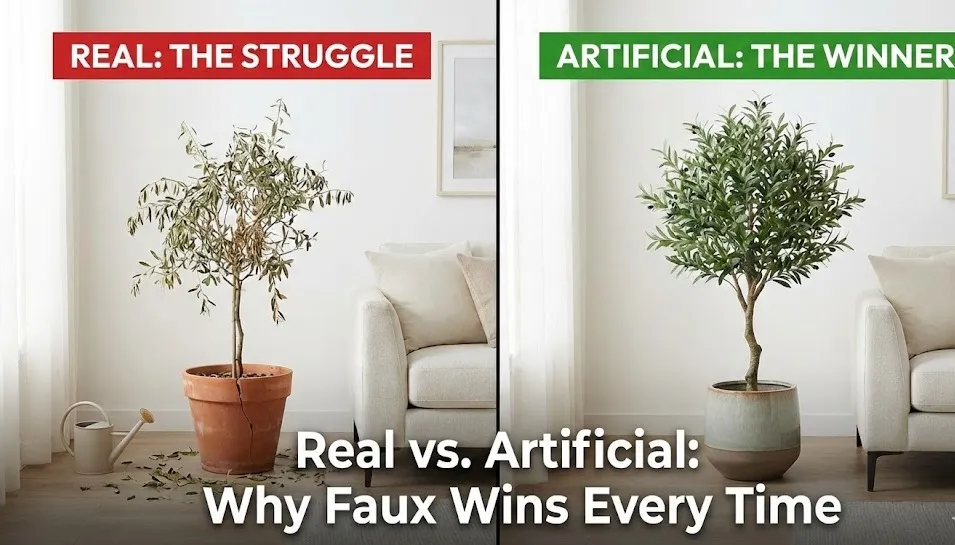
Let’s be honest about the realities of plant parenthood. While we all love the idea of real plants, the reality involves soil messes, watering schedules, and the heartbreak of watching a $150 tree slowly turn brown.
Here is why making the switch to artificial is the smarter choice:
- Zero Maintenance: You never have to water it, prune it, or repot it. You can go on vacation for three weeks and come back to a tree that looks exactly the same.
- Placement Flexibility: A real olive tree needs at least 6 hours of direct sunlight. A faux olive tree? It’s happy in a dark corner, a windowless hallway, or a basement office.
- Cost-Effective: While high-end artificial trees aren’t cheap, it is a one-time investment. Real trees often die and need replacing, costing you more in the long run.
- Pet and Child Safe: Real olive trees are generally non-toxic, but the fertilizers and soil can be messy or dangerous. An artificial tree eliminates the risk of dirt being dug up by your dog or toddler.
How to Choose a Realistic Faux Olive Tree
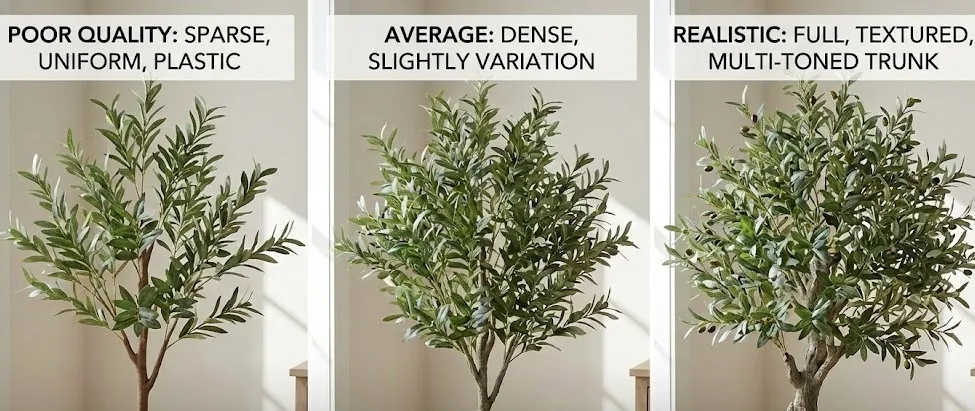
Not all artificial trees are created equal. If you want to avoid the “fake plant” look, you need to be picky. Here are the specific features to look for when shopping for the best faux olive tree:
1. The Trunk Detail
The trunk is usually the giveaway. Look for a tree that features a textured bark. Some premium manufacturers even use real natural wood for the trunk and attach artificial branches to it. This hybrid approach offers the most realistic look possible.
2. The Leaves
Avoid leaves that are one flat color of green. Real olive leaves are sage green on top and a silvery-gray underneath. A high-quality faux tree will mimic this coloration. Also, look for “silk” or high-grade polyester leaves rather than stiff plastic.
3. The Height
Scale is important. A tiny tree in a room with high ceilings will look silly.
- 4 to 5 feet: Great for placing on top of a side table or a plant stand.
- 6 to 7 feet: The standard size for filling a floor corner.
- 8+ feet: Perfect for entryways with vaulted ceilings.
4. Branch Fullness
Real olive trees are somewhat sparse and airy; they aren’t dense bushes. Don’t worry if the faux tree looks a bit “see-through.” That is actually more botanically accurate!
Pro-Tip: How to Style Your Tree Like a Designer
When your faux olive tree arrives in the mail, it will likely come in a small, weighted black pot. This is called a “nursery pot.”
Do not leave it in this pot. This is the number one mistake people make! To make your tree look expensive and real, follow these three steps:
- Buy a Larger Planter: Get a woven seagrass basket, a ceramic pot, or a stone planter that is significantly larger than the nursery pot.
- Elevate the Tree: Place the tree inside the new planter. If it sits too low, put some cardboard boxes or old books at the bottom of the planter to raise the height of the tree.
- Cover the Base: Faux moss is your best friend here. Buy a bag of preserved Spanish moss or decorative river stones and fill the top of the planter to hide the black nursery pot and the cardboard. This single step adds instant realism.
Fluffing: The Secret Sauce
When you take your faux olive tree out of the box, it’s going to look smashed. The branches will be vertical and the leaves squashed.
You must spend 10 to 15 minutes “fluffing” the tree. Gently bend the wire branches outward and downward to mimic the weight of real branches. Twist the leaves so they face different directions. The more imperfect and organic the shape, the more real it will look.
Taking Care of Your Artificial Tree
Yes, even fake plants need a tiny bit of love!
- Dusting: Dust accumulates on the leaves, which makes the color look dull and gives away the fact that it’s fake. Wipe the leaves down with a microfiber cloth once a month.
- UV Protection: If you place the tree in direct blasting sunlight, the green dye may fade over a few years. If it is in a sunroom, rotate the tree occasionally so it fades evenly (or use a UV-protection spray designed for silk plants).
Conclusion
Adding greenery to your home is one of the fastest ways to boost your mood and improve the aesthetic of your space. But you don’t need a green thumb to achieve the look.
A faux olive tree offers the elegance and Mediterranean charm of the real thing without the stress of dropped leaves and watering schedules. By choosing a high-quality tree and styling it in a beautiful basket with moss, you create a stunning focal point that will last for years.
So, go ahead and reclaim that empty corner in your living room. Your home deserves that fresh, organic upgrade, and you deserve a plant that thrives on neglect!